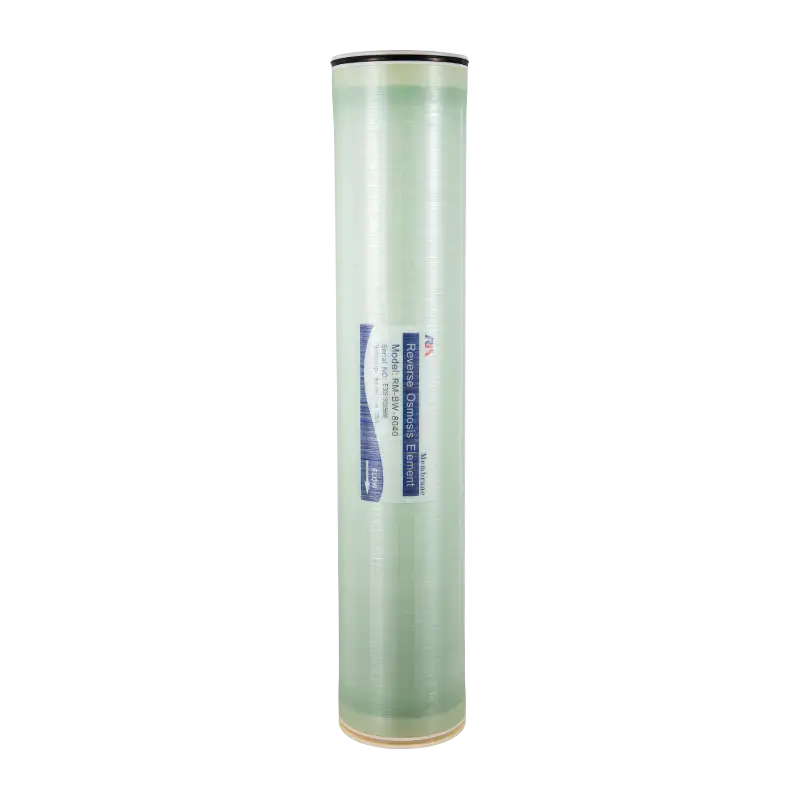
Water treatment systems often need to remove suspended solids, colloids, microorganisms, and other contaminants before water can be reused or sent to a downstream purification process. Ultrafiltration provides a practical membrane-based separation step for these requirements. Unlike reverse osmosis, which focuses more heavily on dissolved salts and other small dissolved substances, UF operates at a different separation level and is often used for water purification, wastewater treatment, and pretreatment.
At Runmo, we manufacture ultrafiltration membranes in both PAN and PVDF materials. Our PVDF range is particularly designed around chemical stability, cleaning resistance, mechanical strength, and filtration performance, making it relevant to industrial water and wastewater applications.
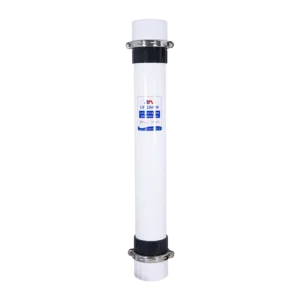
What Does a UF Membrane Do?
A UF membrane uses a porous membrane barrier to separate water from larger suspended and colloidal substances. Feed water is introduced to the membrane module, and pressure drives water through the membrane while retained contaminants remain on the feed side.
This makes UF useful when the treatment objective involves suspended particles, microorganisms, colloids, and similar contaminants rather than comprehensive desalination. In a larger treatment process, UF can also serve as pretreatment for reverse osmosis, helping condition feed water before it reaches the tighter RO separation stage.
The actual result depends on feed-water quality, membrane characteristics, operating conditions, and pretreatment. For industrial users, it is therefore important to evaluate the membrane as part of the complete treatment process rather than as an isolated component.
Why Is PVDF Used for Ultrafiltration?
Material selection directly affects how a membrane responds to cleaning chemicals and operating conditions. Our PVDF membranes use polyvinylidene fluoride as the membrane material. We highlight its high chemical stability, oxidation resistance, and resistance to acids and alkalis as key characteristics.
Regular cleaning is an important part of maintaining membrane performance. Our product information explains that oxidant cleaning can be effective, but oxidants can also damage certain membrane materials. PVDF has more than 10 times the oxidant resistance of polyethersulfone, polysulfone, and other materials under the specified conditions.
This characteristic is particularly relevant where cleaning forms an important part of routine operation. Instead of considering material selection only from the perspective of initial filtration, buyers should also consider the chemicals, cleaning frequency, and operating environment the membrane will encounter.
How Does the Runmo PVDF Design Work?
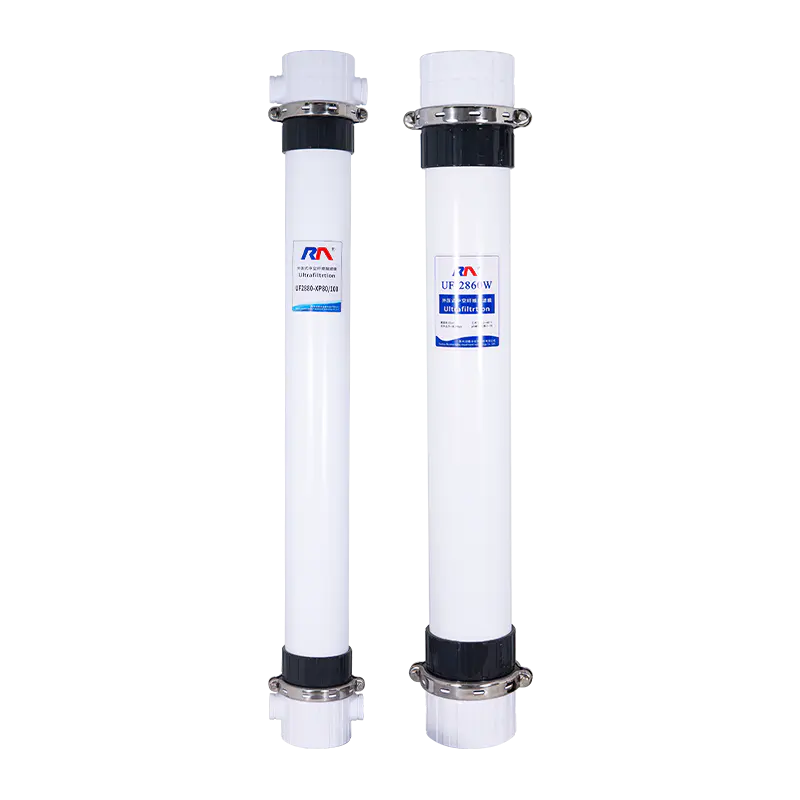
Our PVDF product uses an outside-in ultrafiltration configuration. The external-pressure structure provides a larger filtering area and allows contaminants accumulated on the membrane surface to be removed through cleaning. According to our product information, this structure is also intended to reduce the risk of blockage and improve fouling interception.
We also use hydrophilic modification to improve the product’s resistance to fouling. The membrane fibre is designed for high strength and flexibility, which can be relevant during cleaning operations. Our product information specifically identifies high flux, high strength, improved pollution resistance, and cleaning resistance among the main characteristics of this membrane series.
These design elements work together. A membrane’s performance is not determined by material alone; the membrane structure, fibre characteristics, filtration area, water conditions, and cleaning process all influence how the module functions in an operating system.
Where Can PVDF UF Membranes Be Applied?
Our PVDF ultrafiltration membranes are mainly used in industrial applications including pure water, boiler recharge water, food processing, and pharmaceutical manufacturing.
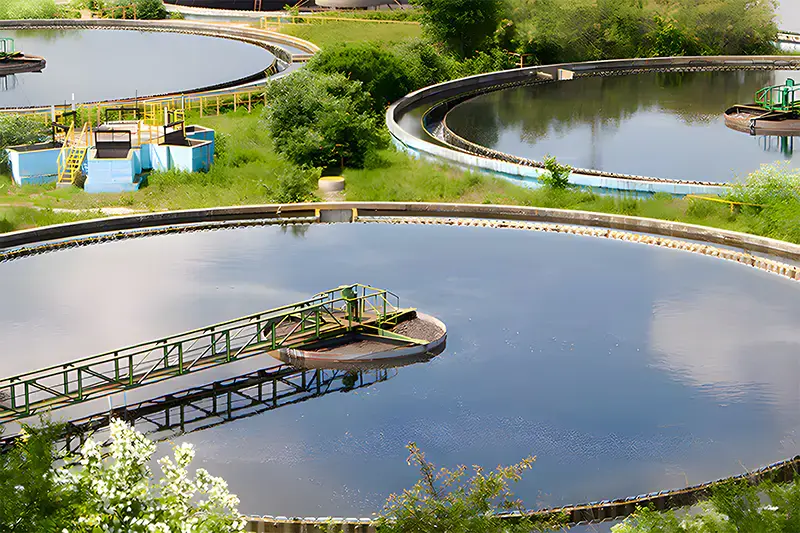
UF can also play an important role in wastewater treatment and reuse. When wastewater contains substantial suspended or colloidal material, an appropriate UF stage can help separate these substances before additional treatment. In systems combining UF and RO, the UF stage can serve as pretreatment, while RO provides a tighter separation for dissolved constituents.
The specific configuration should always be matched to the source water. Industrial wastewater varies considerably between industries, so a membrane that performs well in one application may require a different operating approach in another.
What Specifications Should Buyers Check?
For project engineers and water treatment companies, membrane selection should begin with actual operating requirements. Important considerations include feed-water quality, required flow, filtration conditions, cleaning procedures, membrane dimensions, and compatibility with existing equipment.
Our PVDF product range currently includes five external-pressure membrane element models: RM-UF-4046W, RM-UF-8060W, RM-UF-2660W, RM-UF-2860W, and RM-UF-2880W. Their listed membrane areas range from 6 to 75 m², while the design water yield ranges from 0.3 to 3.8 m³/h at 0.1 MPa and 25°C.
For example, RM-UF-4046W has a listed membrane area of 6 m² and design water yield of 0.3 m³/h, while RM-UF-2880W provides 75 m² of membrane area with a listed design water yield of 3.8 m³/h under the stated test conditions. These figures should be evaluated alongside the actual feed-water characteristics and system design rather than treated as guaranteed field performance.
How Should a UF System Be Maintained?
Pretreatment and cleaning are essential considerations for maintaining membrane performance. Feed-water conditions influence fouling, while a unsuitable cleaning procedure can affect membrane materials and components.
Our FAQ recommends proper feed-water pretreatment and indicates that chemical cleaning should be considered when membrane performance declines. The cleaning method and chemicals should be selected according to the membrane material and the manufacturer’s compatibility guidance.
For a UF membrane system, routine monitoring of flow, pressure, and water quality can help operators identify changes in performance and determine when maintenance may be necessary.
Why Choose Runmo for UF Applications?
We are Suzhou Runmo Water Treatment Technology Co., Ltd., a manufacturer integrating R&D, manufacturing, and sales of reverse osmosis, ultrafiltration, and polymer membrane technologies. Our company information states that we operate automated production lines, maintain an independent R&D system, hold more than 40 patents, and have annual production capacity exceeding 800,000 membrane products.
We provide products and technical support to more than 60 countries.
Our portfolio includes PVDF and PAN UF membranes alongside ULP, BW, SW, and NF membrane technologies. We also provide customized membrane solutions, including specific dimensions, housing designs, and performance characteristics, as well as OEM and ODM services for system integrators and distributors.
If you are planning a wastewater reuse, industrial water, or pretreatment project, contact Runmo with your feed-water analysis and system requirements. We can help you evaluate the appropriate membrane configuration and discuss a PVDF UF solution suited to your application.