Ultrafiltration has become an important separation technology in water treatment because many projects need more than simple particle removal. Municipal systems may need stable feed-water purification, while industrial facilities often have to manage wastewater, process water, or pretreatment requirements under changing operating conditions. In these applications, membrane material can directly affect chemical resistance, cleaning performance, and long-term operating stability.
At Runmo, we use polyvinylidene fluoride (PVDF) for our outside-in ultrafiltration membrane elements because its material characteristics are well suited to demanding water treatment environments. Our UF membrane PVDF solution combines chemical stability, flexibility, high flux, and resistance to cleaning conditions for applications including industrial water treatment and selected municipal water processes.
Why PVDF Matters in Ultrafiltration
The membrane material is not simply a specification on a product sheet. It influences how a ultrafiltration element responds to chemicals, cleaning procedures, mechanical stress, and fouling during operation.
PVDF is known for high chemical stability, with strong oxidation resistance as well as resistance to acids and alkalis.. Regular cleaning is necessary to maintain membrane performance, and our PVDF membrane elements are designed to tolerate oxidant cleaning conditions better than several commonly used polymer materials. PVDF demonstrates more than ten times the resistance to oxidants such as sodium hypochlorite compared with polyethersulfone, polysulfone, and other materials under the stated product comparison.
This characteristic is particularly relevant when a treatment system requires recurring chemical cleaning. A membrane that can withstand its intended cleaning environment can give operators greater flexibility when establishing a maintenance strategy.
Municipal Water Treatment Applications
Municipal water treatment involves different feed-water conditions and treatment objectives, so ultrafiltration is generally selected as one part of a larger treatment process rather than as a universal replacement for every membrane technology.
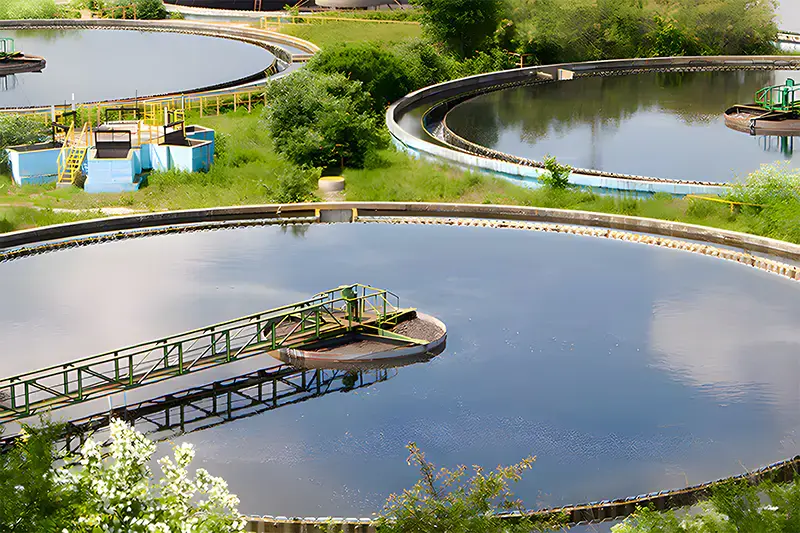
Our website identifies ultrafiltration as an important technology for municipal water supply and domestic water purification. In these applications, UF can be used to reduce suspended particles, colloids, and microorganisms before downstream treatment.
For municipal projects, another consideration is operational consistency. Our PVDF elements use an external-pressure structure that is designed to reduce plugging and provide a larger filtering area. The membrane surface is also hydrophilically modified to improve pollution resistance. These features support cleaning and fouling-management requirements that are common in continuous water treatment systems.
When selecting an element for a municipal project, however, we recommend looking beyond nominal membrane material. Feed-water quality, required flow, operating pressure, cleaning conditions, system configuration, and downstream treatment requirements should all be evaluated before determining the appropriate membrane specification.
Industrial Water Treatment and Reuse
Industrial facilities often face more complicated water conditions than conventional municipal applications. Food processing, pharmaceutical manufacturing, boiler feed-water preparation, and other industrial processes may require controlled filtration as part of a broader water treatment system.
Our PVDF ultrafiltration membrane elements are officially listed for pure water, boiler recharge water, food processing, and pharmaceutical manufacturing applications.
For industrial wastewater and reuse projects, the ability to manage cleaning and fouling is particularly important. Our PVDF membrane combines high porosity and high flux with strong and flexible membrane fibres. Its resistance to breakage during cleaning is supported by practical case investigations, which report a minimum breakage rate.
This makes the UF membrane PVDF option relevant when project engineers need to balance filtration performance with the practical requirements of repeated operation and maintenance.
Choosing the Right Runmo PVDF Membrane Element
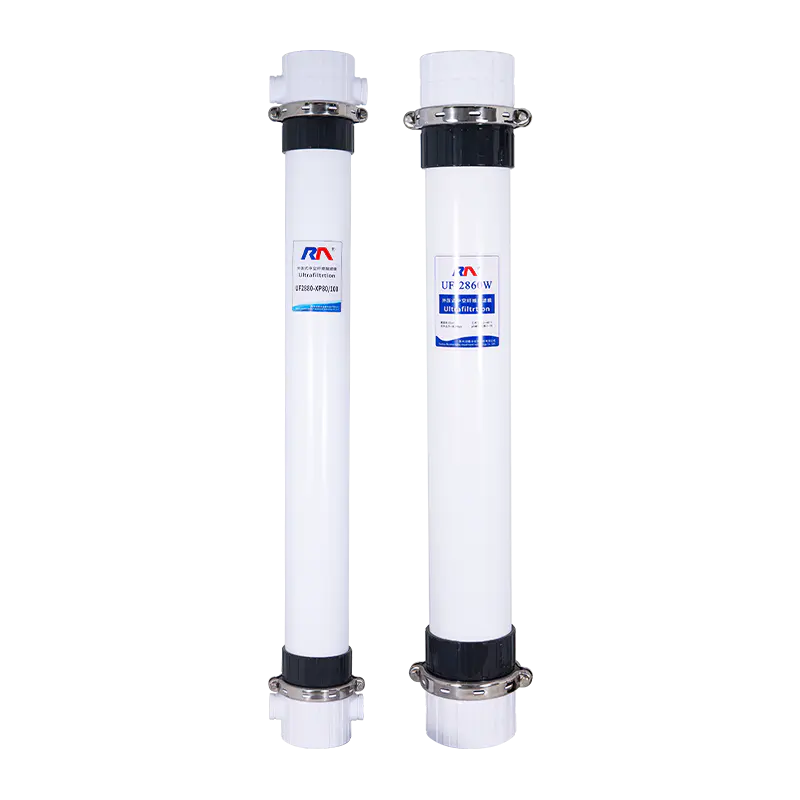
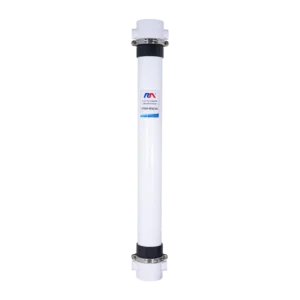
Product selection should be based on the actual system rather than membrane area alone. We provide five PVDF external-pressure ultrafiltration element models: RM-UF-4046W, RM-UF-8060W, RM-UF-2660W, RM-UF-2860W, and RM-UF-2880W. Their membrane areas range from 6 m² to 75 m².
Under the published design conditions of 0.1 MPa and 25°C, the corresponding design water yields range from 0.3 m³/h to 3.8 m³/h. The published produced-water turbidity is below 1 NTU. Module specifications include UPVC shells, epoxy resin casting, and O-ring/EPDM seals, with connection configurations varying by model.
These figures should be treated as reference conditions rather than guaranteed field performance. Actual output depends on feed-water characteristics, system design, operating conditions, and maintenance practices.
Why Work With Us
We are Suzhou Runmo Water Treatment Technology Co., Ltd., a professional manufacturer focused on industrial membranes, including reverse osmosis, ultrafiltration, and polymer membrane technologies. Our products serve municipal water supply, industrial wastewater reuse, food and beverage, chemical, electronics, pharmaceutical, and other water treatment applications.
Our advantage is not limited to supplying individual membrane elements. We maintain vertically integrated production from membrane material preparation to finished product assembly, supported by an R&D team, testing equipment, and a quality-control system. We also provide membrane customization, system design, engineering implementation, and technical services according to project requirements.
If you are evaluating PVDF ultrafiltration for a municipal water system, industrial process, or wastewater reuse project, we can help you review the application requirements and identify a suitable membrane configuration. Contact Runmo with your feed-water conditions, required capacity, and treatment objectives to discuss the appropriate membrane solution for your project.