Ultrafiltration is widely used when a water treatment process needs to remove suspended matter, colloids, microorganisms, and other larger contaminants without relying on the much tighter separation associated with reverse osmosis. Among the available UF configurations, hollow fibre membranes offer a large membrane surface area within a compact module, making them suitable for continuous industrial filtration and pretreatment applications.
At Runmo, we manufacture UF membrane elements in both modified PAN and PVDF materials. Understanding how hollow fibre ultrafiltration works, how these materials differ, and where the technology fits into a treatment process can help water treatment companies make a more informed selection.

What Is a Hollow Fibre UF Membrane?
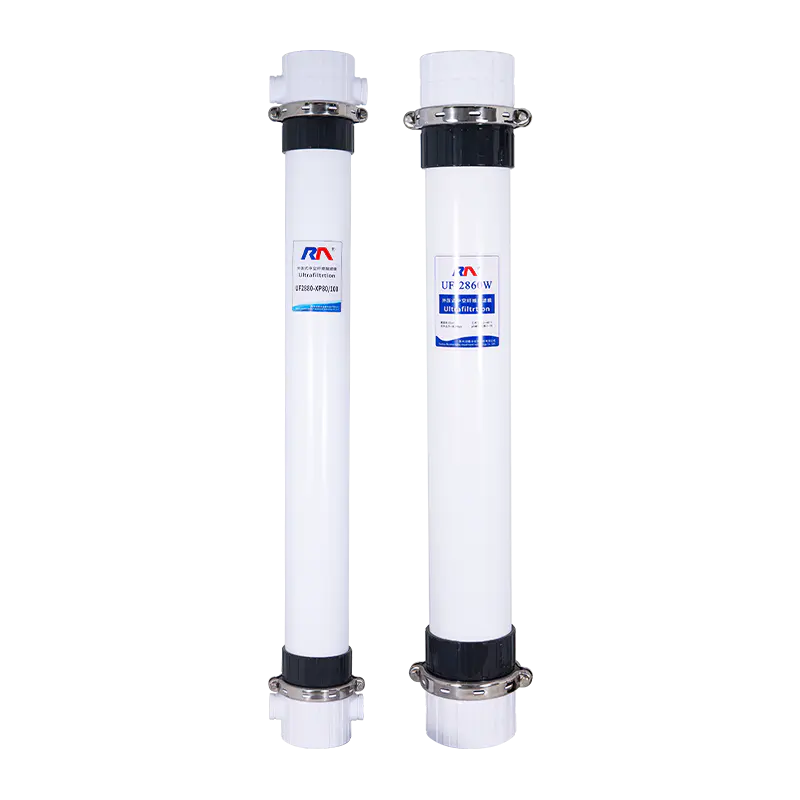
A hollow fibre UF membrane consists of numerous small, hollow membrane fibres assembled into a membrane module. Water passes through the porous membrane wall while substances larger than the membrane’s separation capability are retained.
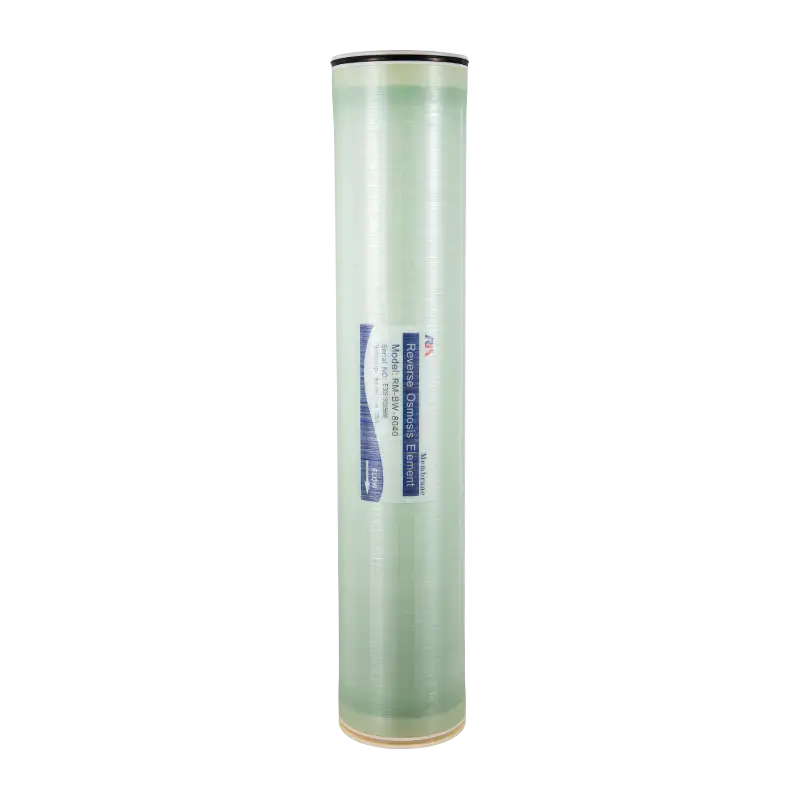
Unlike RO, which is designed for much tighter separation and dissolved-solids reduction, UF primarily addresses suspended particles, colloids, microorganisms, and other larger contaminants. This makes it useful for applications where clarification and feed-water purification are required before a subsequent treatment stage.
The exact configuration and filtration direction can vary between products. At Runmo, our UF portfolio includes inside-out modified PAN membrane elements and outside-in PVDF membrane elements, giving customers different options for different operating conditions.
How Does Hollow Fibre Ultrafiltration Work?
The basic principle is straightforward: feed water enters the membrane module, and pressure drives water through the porous membrane surface. Retained contaminants remain on the feed side and are removed through the appropriate filtration and cleaning process.
Runmo’s modified PAN UF membrane can operate with either full-volume filtration or cross-flow filtration according to water-quality conditions. According to water-quality conditions, full-volume or cross-flow filtration can be selected. Full-volume filtration offers energy-saving and high water-utilization advantages, while cross-flow filtration can discharge pollutants and reduce the frequency of membrane cleaning.
Our PVDF configuration uses an outside-in structure. Runmo describes the external-pressure structure as providing a larger filtering area and making membrane-surface fouling easier to remove during cleaning.
This difference illustrates why buyers should evaluate the complete membrane module rather than considering membrane material alone. Fibre arrangement, filtration direction, operating conditions, pretreatment, and cleaning procedures all influence how a UF system performs.
Why Is Membrane Material Important?
Material selection affects how a UF membrane responds to chemical exposure, cleaning, mechanical stress, and operating conditions.
Our modified PAN UF membrane is designed with permanent hydrophilicity, good oxidation resistance, thermal stability, and mechanical properties. Runmo’s product information also specifies a membrane-fibre breakage rate of less than three thousandths and describes a central pipe bracket designed to distribute the fibres evenly and maintain smooth water flow.
Our PVDF UF membrane takes a different approach. Polyvinylidene fluoride provides high chemical stability, oxidation resistance, and resistance to acids and alkalis. Runmo also highlights its flexibility and resistance to oxidant cleaning, which are relevant considerations for wastewater applications where regular cleaning is part of normal operation.
Neither material should be viewed as universally suitable for every project. The better choice depends on the feed-water characteristics, cleaning regime, mechanical requirements, and the role of the UF stage within the complete treatment system.
Where Are UF Hollow Fibre Membranes Commonly Used?
UF technology can be applied across several water treatment scenarios. Runmo lists applications including industrial pure water, boiler recharge water, food processing, and pharmaceutical manufacturing for its UF membrane products.
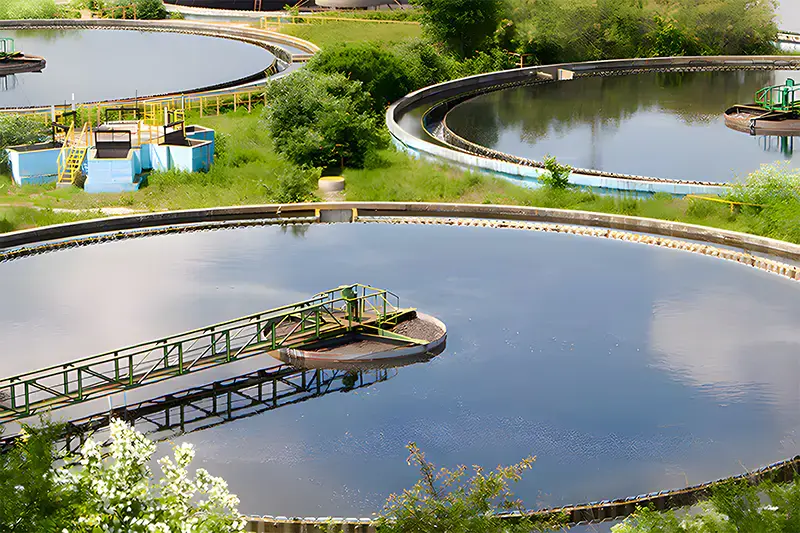
UF is also relevant to wastewater treatment and reuse. In a larger membrane treatment system, UF can be positioned upstream of RO to help reduce the suspended and colloidal load entering the RO stage. This can make UF an important part of pretreatment rather than a standalone purification technology.
For drinking-water projects, UF can also contribute to the removal of microorganisms, colloids, and suspended substances. However, the complete treatment configuration still needs to be designed around the source-water quality and applicable water-quality requirements.
The same principle applies to industrial wastewater. Different industries produce wastewater with different chemical compositions and contaminant loads, so membrane selection should be based on actual water analysis rather than application labels alone.
How Should Businesses Select a UF Membrane?
For system integrators and water treatment companies, selection should begin with the feed water. Important information can include turbidity, suspended solids, organic loading, temperature, pH, and the substances likely to cause membrane fouling.
The required permeate flow and filtration mode should then be considered. Buyers should also examine the module’s physical dimensions, operating limits, cleaning requirements, and compatibility with the existing treatment system.
Our FAQ recommends considering feed-water quality, required permeate flow, and operating conditions when selecting membrane products. We also provide technical consultation based on customers’ water analysis reports, allowing product selection to be connected with the actual project rather than relying only on a general product category.
Cleaning deserves particular attention. Runmo states that proper feed-water pretreatment is essential and recommends a standard chemical cleaning procedure when membrane performance declines. The appropriate cleaning method and chemicals should always be compatible with the selected membrane material.
What Does Runmo Offer for UF Applications?
Our UF range includes both PAN and PVDF membrane elements. The two product families allow us to address different requirements related to chemical resistance, filtration configuration, mechanical characteristics, and cleaning conditions.
We also manufacture other membrane technologies, including RO, NF, ULP, BW, and SW membranes, allowing us to evaluate UF alongside other membrane processes when the treatment requirements call for a combined approach.
As a direct manufacturer, we provide customized membrane solutions, including specific dimensions, housing designs, and performance characteristics, as well as OEM and ODM services for system integrators and distributors.
Why Work With Runmo?
We are Suzhou Runmo Water Treatment Technology Co., Ltd., a manufacturer integrating R&D, manufacturing, and sales of reverse osmosis, ultrafiltration, and polymer membrane technologies. We have an independent R&D system, automated production lines, annual production capacity of more than 800,000 membrane products, and more than 40 patents. We provide membrane products and technical support to more than 60 countries.
For businesses evaluating UF for wastewater reuse, pretreatment, industrial water, or other filtration projects, we can support the process from product selection through customized solutions and technical services. If you have feed-water analysis, flow requirements, or existing system specifications, contact Runmo to discuss the appropriate UF membrane configuration for your application.