Industrial water systems rarely deal with one standard type of feed water. Groundwater, surface water, municipal supplies, and process water can all contain different concentrations of dissolved salts and other contaminants. When the feed water has a higher salt load than typical freshwater, reverse osmosis can provide a practical desalination approach, with membrane selection based on the actual feed-water conditions.
In these applications, brackish water RO membranes need to balance salt rejection, permeate production, operating pressure, and resistance to the actual feed-water conditions. At Runmo, we design our BW series around these requirements, with product options for different industrial water-treatment needs.
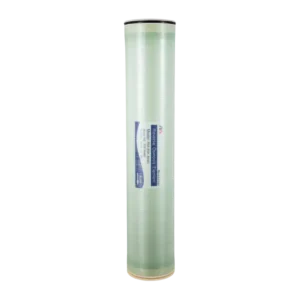
When Is Brackish-Water RO Appropriate?
The first question is not which membrane to buy, but whether the feed water is suitable for a brackish-water RO configuration. Salinity can vary significantly between water sources, so buyers should evaluate the actual water analysis rather than classify a source by name alone.
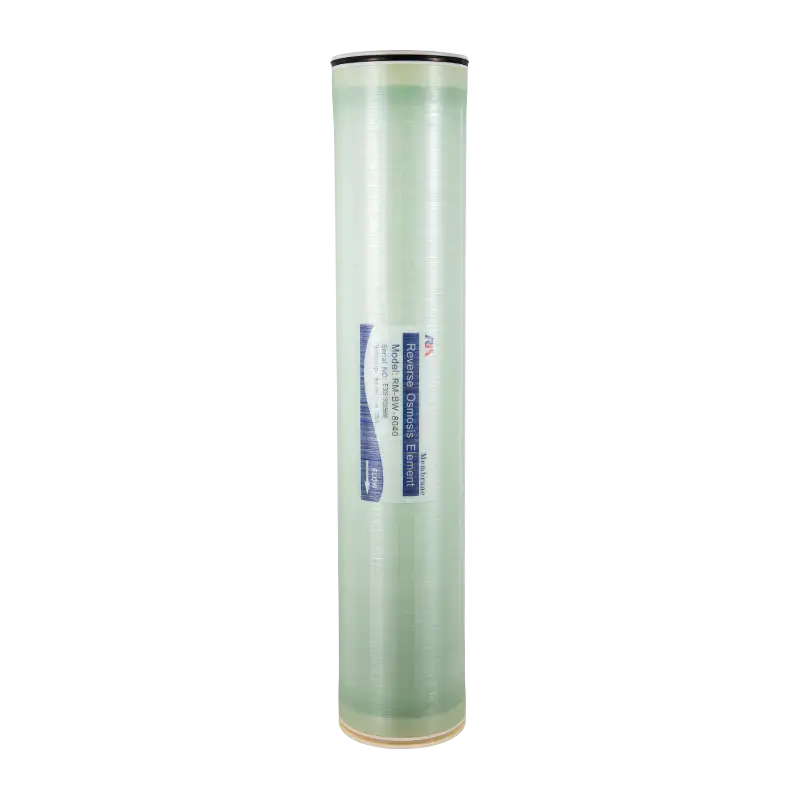
Our BW series is designed for surface water, groundwater, tap water, and municipal water with salt content below 10,000 ppm. Our BW series is an aromatic polyamide composite membrane element intended for brackish-water desalination.
For industrial projects, we recommend checking TDS together with temperature, pH, required permeate flow, target rejection, and operating pressure. These parameters directly influence membrane selection and system design.
Which Industrial Applications Use These Membranes?
Brackish-water RO can serve as a core desalination stage in several industrial processes. The appropriate configuration depends on the quality of the feed water and the quality required after treatment.
Industrial Pure-Water Production
Many manufacturing processes require water with substantially reduced dissolved salts. Our BW series is designed for industrial pure-water applications at different scales and can be incorporated into systems where RO is used as a major purification stage.
The membrane also provides high performance in removing soluble salts, TOC, and SiO₂. For electronics and power-related applications, our product information specifically identifies the BW series as suitable for producing highly purified water.
Power Plant Boiler Feed Water
Boiler systems place particular demands on feed-water quality. Dissolved substances need to be controlled before water enters downstream equipment and processes.
Our BW series is intended for boiler feed-water applications in power plants. In a complete treatment system, however, membrane selection should be coordinated with pretreatment and downstream purification rather than considered as an isolated component.
Food and Beverage Processing
Water can be part of the production process itself, making consistent treatment important for food and beverage manufacturers. Our published application information includes food processing and beverage water manufacturing among the potential uses of the BW series.
For these projects, feed-water analysis remains important because organic matter, hardness, turbidity, and other characteristics can influence membrane operation even when the overall TDS is within the applicable range.
High-Concentration Saline Wastewater
Industrial wastewater may contain considerably more dissolved salts than incoming process water. Our BW series can also be used in brackish-water applications involving high-concentration saline wastewater. The appropriate configuration should be determined from the actual wastewater composition and treatment objective.
How Should Industrial Buyers Compare Membrane Performance?
Permeate flow and salt rejection are two of the most visible specifications, but they should always be read alongside the testing conditions.
Our published BW performance table lists five membrane models. RM-BW-4021 provides an average permeate flow of 950 GPD, with a stable rejection of 99.5%. RM-BW-4040 provides 2,000 GPD with the same stable rejection, while RM-BW-8040 provides 10,500 GPD. The FR versions, RM-BW-4040FR and RM-BW-8040FR, are listed with stable rejection of 99.6%.
These figures are based on specified testing conditions: 225 psi (1.5 MPa), 25°C, 2,000 ppm NaCl, pH 7.5, and specified single-element recovery rates. They should therefore be used as reference performance data rather than treated as guaranteed results under every field condition.
What Operating Conditions Should Be Checked?
A membrane can only perform as expected when the feed water and operating conditions remain within its applicable limits.
For our BW series, the published maximum working pressure is 600 psi (4.14 MPa), while the maximum feed-water temperature is 45°C and maximum feed-water TDS is 5,000 ppm under the stated operating limits. The continuous feed-water pH range is 2–12, with maximum SDI15 of 5 and maximum turbidity of 1 NTU. Additional limits apply to COD, BOD, TOC, residual chlorine, hardness, feed flow, and pressure drop.
This information is particularly important for industrial buyers because membrane compatibility cannot be determined from TDS alone.
How Does the FR Version Address Fouling?
For projects where membrane fouling is a concern, our BW portfolio also includes FR-treated versions.
The FR membrane surface undergoes a special treatment that changes its surface charge and smoothness while increasing hydrophilicity. The intended effect is to reduce the contamination of pollutants and microorganisms on the membrane surface, helping reduce component fouling and extend service life.
This does not eliminate the need for pretreatment or appropriate cleaning. Our FAQ emphasizes that proper feed-water pretreatment is essential for membrane performance and recommends standard CIP procedures when performance declines.
Why Work With Runmo for Industrial RO Projects?
At Runmo, we are Suzhou Runmo Water Treatment Technology Co., Ltd., a manufacturer integrating R&D, manufacturing, and sales of reverse osmosis membranes, ultrafiltration membranes, and polymer membrane technologies. We operate an independent R&D system and automated production lines, with annual production capacity of more than 800,000 membrane products and more than 40 patents. We provide products and technical support to more than 60 countries.
We also offer vertically integrated manufacturing, from raw membrane material preparation to finished membrane assembly. For system integrators and distributors, we provide customized dimensions, housing designs, performance characteristics, and OEM/ODM services.
If you are selecting brackish water RO membranes for industrial pure water, boiler feed water, food processing, beverage production, or saline wastewater treatment, send us your water analysis and project requirements. Our team can help evaluate the appropriate BW membrane configuration and develop a solution around your actual operating conditions.