When engineers or procurement teams see a membrane model such as NF 8040, the number may look like a simple product code. In practice, this designation is closely related to the membrane element format and helps buyers understand where the product fits within a water treatment system. However, the format alone does not determine whether a membrane is suitable for a particular project.
At Runmo, we offer nanofiltration membrane elements for industrial and municipal treatment systems where selective separation, desalination, and high permeate flow are required. Our NF series includes both RM-NF-4040 and RM-NF-8040, giving system designers different membrane-area options for different capacity requirements.
What Does NF 8040 Mean?
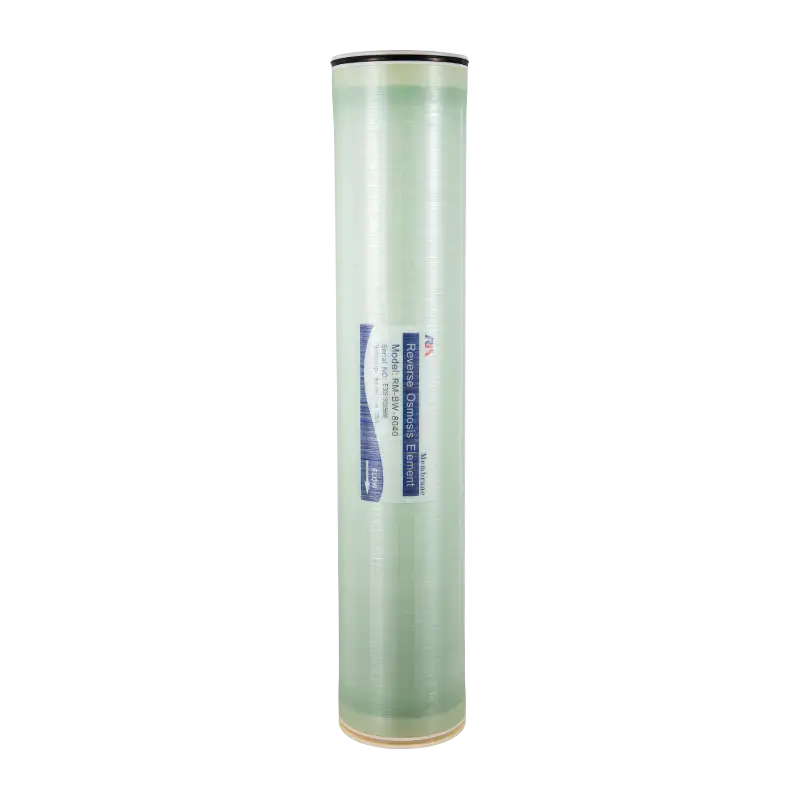
The “NF” designation identifies the product as a nanofiltration membrane, while “8040” identifies the larger membrane-element format used in the product series. For buyers, the key point is that an 8040 element provides substantially more membrane area than a 4040 element.
Our RM-NF-8040 has a membrane area of 400 ft² (37 m²), compared with 85 ft² (7.9 m²) for the RM-NF-4040. This difference matters when engineers are planning system capacity and determining how many membrane elements may be required.
The model number should therefore be considered together with membrane area, expected permeate flow, operating pressure, and feed-water conditions. Choosing an 8040 element simply because it is larger is not enough; the system still needs to be designed around the actual water-treatment requirement.
How Does a NF Membrane Fit Into Water Treatment?
Nanofiltration occupies a different position from conventional ultrafiltration and reverse osmosis. The technology is useful when a project requires separation of certain dissolved substances while maintaining a high permeate flow.
Our NF series is designed to provide high permeate water production and desalination performance. It has strong removal capabilities for pesticides, viruses, and bacteria, a high ability to remove natural organic substances, and a medium ability to remove total hardness.
This makes nanofiltration relevant to projects where the treatment objective is more selective than simple particle removal. It can also provide an alternative to using a more intensive separation process when the water-quality target does not require the same treatment approach as a full reverse osmosis system.
Where Is the NF 8040 Commonly Used?
The NF 8040 is particularly relevant to larger treatment systems where membrane area and permeate capacity are important considerations.
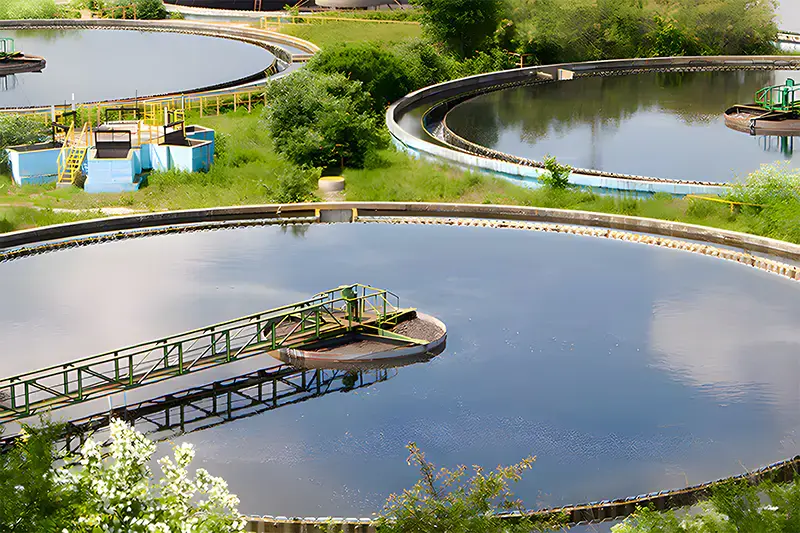
Runmo identifies its NF series as suitable for large-scale industrial and municipal water treatment systems. The stated scope of application also includes industrial fields such as pure-water preparation, boiler recharge water, food processing, and pharmaceutical manufacturing.
In a municipal application, nanofiltration may be considered when the treatment process needs to address organic substances, hardness, or selected contaminants. In industrial projects, the same technology can be incorporated into process-water or purification systems according to the characteristics of the feed water and the required product-water quality.
The appropriate application should always be determined from water analysis and process requirements rather than from membrane size alone.
What Performance Can an 8040 Element Provide?
For buyers comparing membrane elements, published test conditions are just as important as the headline performance numbers.
Our RM-NF-8040 has 400 ft² (37 m²) of membrane area and a published average permeate flow of 9,000 GPD (33.9 m³/day). Its stable rejection is listed at 55–75%. The corresponding RM-NF-4040 provides 85 ft² (7.9 m²) of membrane area and an average permeate flow of 2,200 GPD (7.9 m³/day), also with stable rejection of 55–75%.
These values were measured under published test conditions of 70 psi (0.48 MPa), 25°C, a solution containing 2,000 ppm NaCl and 2,000 ppm MgSO₄, pH 8, and a single-element recovery rate of 15%. Actual field performance can vary with feed-water composition, system configuration, temperature, pressure, and operating practices.
What Should Buyers Check Before Selecting an 8040?
Membrane format is only one part of the selection process. We recommend evaluating several parameters together:
Feed-water quality: TDS, temperature, pH, hardness, organic loading, turbidity, and SDI can influence membrane selection and pretreatment requirements.
Required permeate flow: The target capacity determines whether a larger 8040 element or a smaller 4040 configuration is more appropriate.
Operating pressure: Our NF series is designed for ultra-low-pressure operation, while the published maximum working pressure is 600 psi (4.14 MPa).
Operating limits: Runmo specifies a maximum feed-water temperature of 45°C, continuous operating pH of 3–10, maximum TDS of 2,000 ppm, residual chlorine below 0.1 ppm, and maximum turbidity of 1.0 NTU. The maximum single-element pressure drop is 15 psi (0.1 MPa).
These limits should be incorporated into the system design rather than treated as optional reference figures.
Why Choose Runmo for NF Membrane Solutions?
We are Suzhou Runmo Water Treatment Technology Co., Ltd., a manufacturer specializing in reverse osmosis membranes, ultrafiltration membranes, and polymer membrane technologies. We maintain an independent R&D system and automated production lines, with annual production capacity exceeding 800,000 membrane products and more than 40 patents. Our products and technical support serve customers in more than 60 countries.
At Runmo, we also support projects beyond standard membrane supply. Our services include membrane customization, system design, engineering implementation, and technical support. We provide a range of membrane technologies, including NF, UF, ULP, BW, and SW products, allowing us to consider the feed-water conditions and treatment objectives before recommending a suitable solution.
If you are evaluating a NF 8040 element for a municipal or industrial water treatment project, send us your water analysis, required permeate capacity, and operating conditions. We can help you determine whether the RM-NF-8040 or another membrane configuration is appropriate for your system.