When a water treatment system needs selective separation without necessarily applying the operating conditions associated with conventional reverse osmosis, nanofiltration can be a useful option. Within a NF system, membrane element size also matters because it affects the available membrane area and the way the system is configured.
The NF 4040 format is one of the membrane options we provide for nanofiltration applications. Rather than viewing the model number as an isolated specification, we recommend considering it alongside feed-water quality, required permeate production, rejection targets, and operating conditions. This approach helps engineers and procurement teams determine whether the element fits the actual treatment process.
What Does NF 4040 Mean?
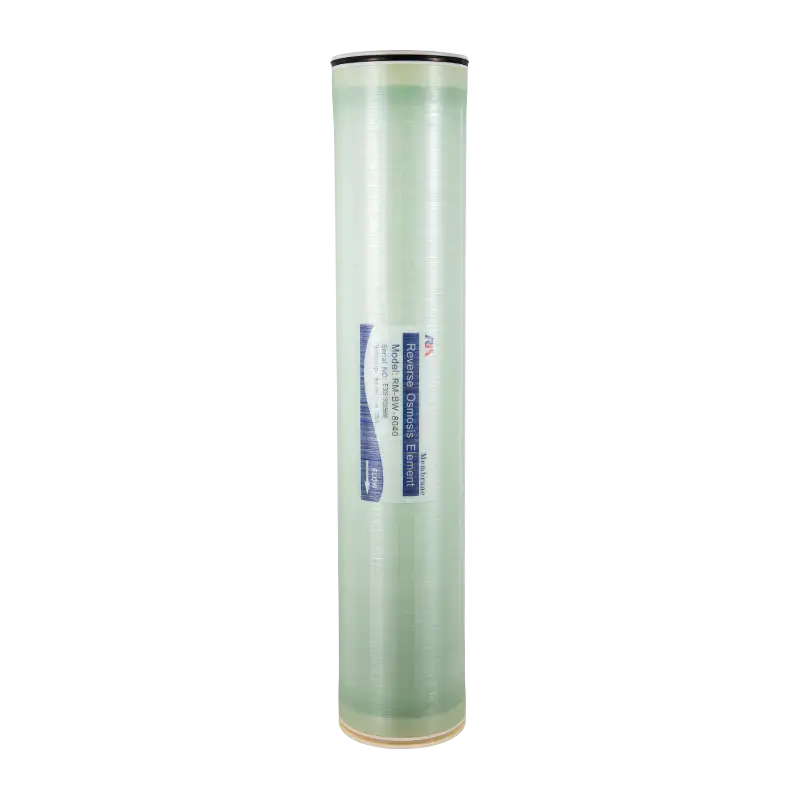
The “NF” designation identifies the element as a nanofiltration membrane, while “4040” refers to its membrane-element format. In our NF product range, the RM-NF-4040 has a membrane area of 85 ft² (7.9 m²).
This format is smaller than our RM-NF-8040, which provides 400 ft² (37 m²) of membrane area. The difference gives system designers flexibility when matching membrane configuration to required treatment capacity. A smaller element can be appropriate for certain system sizes, while larger elements may be considered when higher permeate production is required.
The model size alone, however, should not determine selection. A membrane system must be designed around the characteristics of the feed water and the performance required from the finished treatment process.
How Does Nanofiltration Differ From Other Membrane Processes?
Nanofiltration sits between ultrafiltration and reverse osmosis in terms of the type of separation it is commonly used to achieve. Ultrafiltration is primarily concerned with suspended solids, colloids, and microorganisms, while reverse osmosis is widely used when very high levels of dissolved-salt removal are required.
Our NF series is designed for high permeate production and desalination performance. According to our published product information, the membrane has strong removal capabilities for pesticides, viruses, and bacteria, a high ability to remove natural organic substances, and a medium ability to remove total hardness.
This combination makes nanofiltration relevant when a project needs more selective treatment than conventional filtration while the process does not necessarily require the same treatment approach as seawater or high-salinity RO.
Common Uses of the NF 4040
Industrial Water Treatment
Industrial facilities may use nanofiltration as part of processes for water purification, process-water preparation, or other controlled treatment requirements. Our NF series is officially listed for industrial applications including pure water, boiler recharge water, food processing, and pharmaceutical manufacturing.
For these applications, the NF 4040 can be considered where its membrane area and expected permeate capacity align with the system design. The actual configuration should depend on feed-water characteristics and the required treatment target rather than simply selecting a membrane based on its physical format.
Municipal Water Treatment
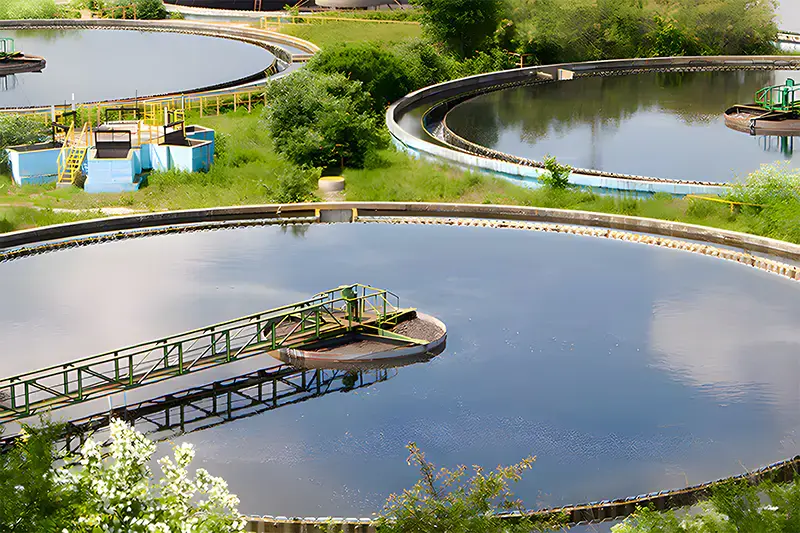
Our NF series is also intended for large-scale municipal water treatment systems. Its ability to address natural organic substances, selected microorganisms, and hardness makes nanofiltration relevant to treatment processes where several water-quality parameters need to be managed simultaneously.
The role of NF within a municipal system will depend on the source-water quality and the overall treatment train. Pretreatment and downstream processes should therefore be considered together with the membrane stage.
What Performance Does the NF 4040 Provide?
Our RM-NF-4040 has a published average permeate flow of 2,200 GPD, equivalent to 7.9 m³/day. Its membrane area is 85 ft² (7.9 m²), and the published stable rejection range is 55–75%.
These figures were obtained under specific testing conditions: 70 psi (0.48 MPa) testing pressure, 25°C solution temperature, a solution containing 2,000 ppm NaCl and 2,000 ppm MgSO₄, pH 8, and a single-element recovery rate of 15%. They should therefore be treated as reference performance data rather than as fixed results for every installation.
Temperature, feed-water composition, operating pressure, recovery, pretreatment, and system configuration can all influence actual membrane performance.
What Should Be Checked Before Selection?
Selecting a NF 4040 should begin with the feed water rather than the product catalogue. We recommend reviewing several factors before finalizing the membrane configuration.
Feed-water quality is fundamental. Our published operating limits include a maximum TDS of 2,000 ppm, maximum feed-water temperature of 45°C, continuous operating pH of 3–10, and maximum turbidity of 1.0 NTU. The specified maximum SDI15 is 5.
Organic and chemical conditions also need attention. The published limits include COD up to 10 ppm, BOD up to 5 ppm, TOC up to 10 ppm, and residual chlorine below 0.1 ppm. Maximum feed-water hardness is listed as 60 ppm.
System capacity is another important consideration. Our RM-NF-4040 has a maximum feed-water flow specification of 16 gpm (3.6 m³/h), while the RM-NF-8040 is specified for up to 75 gpm (17 m³/h). This distinction helps engineers assess which element format is more suitable for a particular system design.
Why Consider Runmo for NF Applications?
At Runmo, we are Suzhou Runmo Water Treatment Technology Co., Ltd., integrating R&D, manufacturing, and sales of reverse osmosis membrane, ultrafiltration membrane, and polymer membrane technologies. We maintain an independent R&D system and automated production lines, with annual production capacity of more than 800,000 membrane products and more than 40 patents. We currently provide products and technical support to more than 60 countries.
Our manufacturing capabilities cover both small-batch customization and large-scale delivery, while our product portfolio includes NF, UF, ULP, BW, and SW membrane technologies. This allows us to consider different feed-water conditions rather than treating every water-treatment project with one membrane type.
If you are evaluating a NF 4040 for an industrial or municipal water treatment project, share your feed-water analysis, required capacity, and operating conditions with us. We can help you assess the appropriate membrane configuration and determine whether the RM-NF-4040 fits your treatment requirements.