When the feed water contains a high concentration of dissolved salts, choosing a conventional reverse osmosis element without considering the water source can create unnecessary operating challenges. Seawater requires a membrane designed around high salinity, elevated operating pressure, and strict pretreatment requirements. This is where seawater reverse osmosis becomes particularly relevant.
At Runmo, we develop different membrane series for different feed-water conditions rather than treating every reverse osmosis application in the same way. Our SW Series is specifically designed for seawater desalination and high-concentration brackish water treatment, providing a dedicated option for projects where salinity is a central design consideration.
What Is a Seawater RO Membrane?
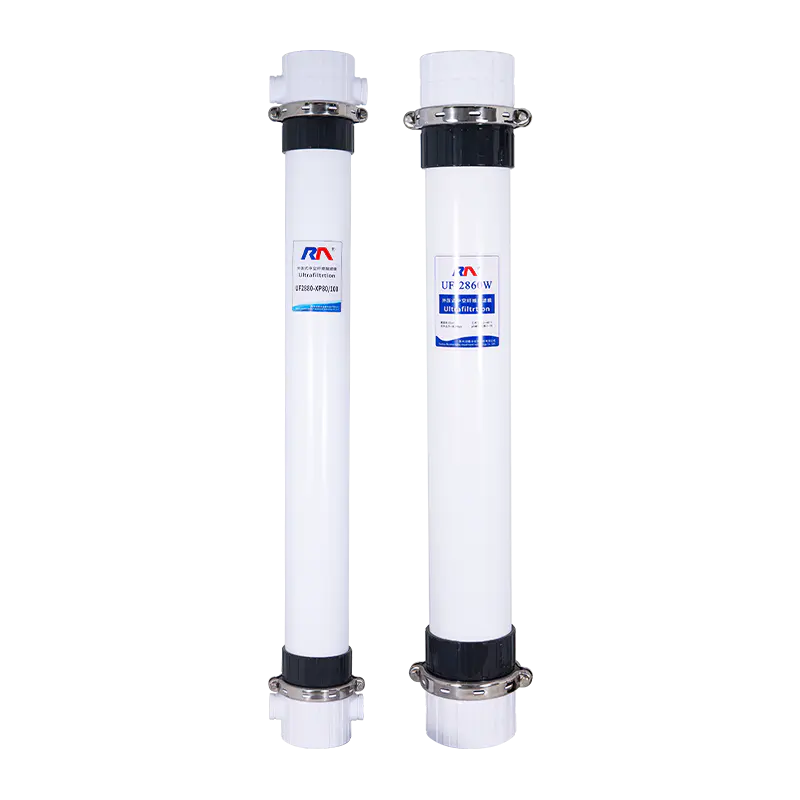
A seawater RO membrane is a reverse osmosis membrane element designed to separate dissolved salts and other contaminants from high-salinity feed water. Unlike ultrafiltration, which is primarily used for particulate and microbial separation, RO relies on a semipermeable membrane and pressure-driven separation to produce lower-salinity permeate.
The operating environment is an important distinction. Seawater contains considerably more dissolved salts than many freshwater or brackish-water sources, so the membrane element and the surrounding system must be selected accordingly.
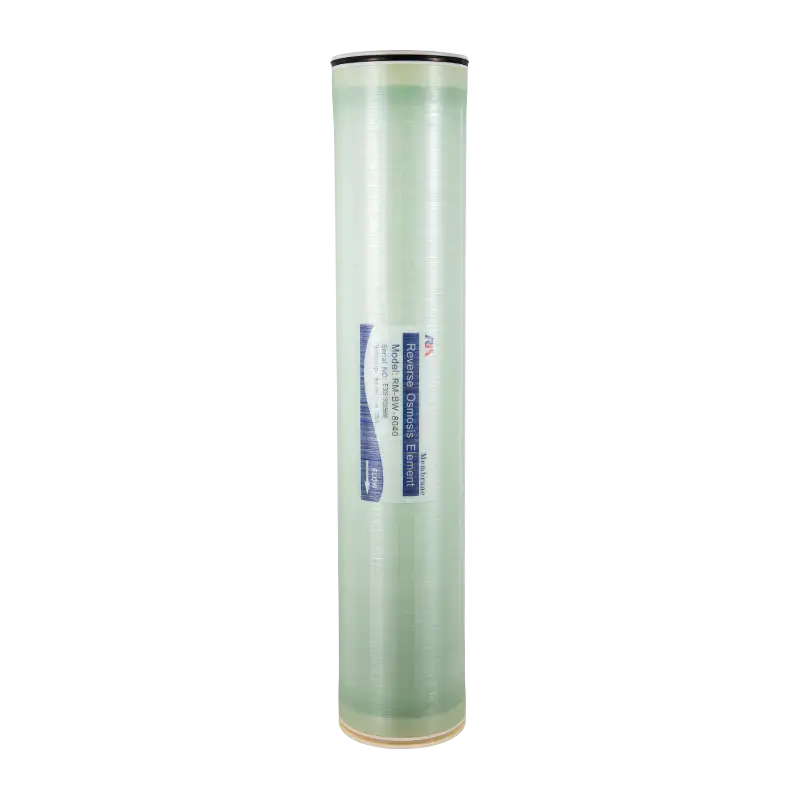
Our SW Series uses an aromatic polyamide composite membrane element for seawater desalination. We optimize the structure of the membrane element to increase water production and, under the same water-production requirement, potentially reduce the number of elements needed in the system.
Where Is Seawater RO Commonly Used?
Seawater Desalination
The most direct application is converting seawater into a usable freshwater stream. Coastal regions, islands, and facilities with limited freshwater resources may use seawater desalination as part of their water-supply strategy.
Our SW Series is designed specifically for this application. The published product information highlights low operating pressure, lower equipment investment, desalination performance, and operational stability as key characteristics of the series.
The membrane itself is only one part of the desalination system, however. Pretreatment, pumps, pressure vessels, recovery design, and post-treatment all influence the final system performance.
High-Concentration Brackish Water
Not every high-salinity feed stream comes directly from the sea. Some brackish-water sources can contain salt concentrations high enough to require a membrane solution closer to seawater desalination technology.
We list our SW Series as suitable for seawater and high-concentration brackish water. This gives system designers an additional option when the feed-water characteristics fall outside the preferred range of lower-salinity RO applications.
For comparison, our BW Series is intended for brackish-water desalination and is suitable for surface water, groundwater, tap water, and municipal water with salt content below 10,000 ppm. This distinction illustrates why we recommend selecting a membrane according to actual water analysis rather than simply the project name.
Industrial Uses Beyond Desalination
A seawater RO membrane does not have to be limited to municipal drinking-water projects. High-salinity water treatment is also relevant to industrial facilities where treated water is required for production or reuse.
Our SW Series can be used for power-plant boiler feed water, wastewater reuse, and the concentration and recovery of high-value substances in food and pharmaceutical applications. The broader Runmo portfolio also covers industrial pure water, food processing, pharmaceutical manufacturing, and other water-treatment requirements.
In these projects, the appropriate membrane depends on the actual composition of the feed stream and the required quality of the permeate. Industrial wastewater, for example, may contain organic matter, suspended solids, or other contaminants that make pretreatment particularly important before the RO stage.
What Performance Data Should You Check?
For buyers comparing seawater RO elements, two of the most visible figures are permeate flow and salt rejection. These numbers are useful, but they should always be read together with their testing conditions.
Our SW Series currently includes two models. RM-SW1-4040 has 80 ft² (7.4 m²) of membrane area, an average permeate flow of 1,900 GPD (7.2 m³/day), stable rejection of 99.7%, and minimum rejection of 99%. RM-SW2-8040 has 380 ft² (35.2 m²) of membrane area, an average permeate flow of 8,200 GPD (31 m³/day), stable rejection of 99.7%, and minimum rejection of 99%.
These published figures were tested at 800 psi (5.5 MPa), 25°C, 30,000 ppm NaCl, pH 7.5, and an 8% single-element recovery rate. They therefore provide a reference for comparing the models, rather than a guarantee of identical performance under every field condition.
Feed-Water Conditions Cannot Be Ignored
Even a properly selected membrane requires suitable operating conditions. For our SW Series, the published maximum working pressure is 1,000 psi (6.9 MPa), with a maximum feed-water SDI15 of 5 and maximum feed-water temperature of 45°C. The continuous operating pH range is 2–12.
Other published limits include maximum feed-water TDS of 5,000 ppm, residual chlorine below 0.1 ppm, COD up to 10 ppm, BOD up to 5 ppm, TOC up to 10 ppm, hardness up to 60 ppm, and turbidity up to 1.0 NTU. The maximum pressure drop across a single element is 15 psi (0.1 MPa).
These specifications are important when engineers design pretreatment and operating procedures. Feed-water analysis should come before final membrane selection, especially when the source is variable or industrially contaminated.
Why Choose Runmo for Seawater RO Projects?
We are Suzhou Runmo Water Treatment Technology Co., Ltd., a manufacturer specializing in reverse osmosis membranes, ultrafiltration membranes, and polymer membrane technologies. We operate our own R&D system and automated production lines, with annual production capacity exceeding 800,000 membrane products and more than 40 patents. Our products and technical support serve customers in more than 60 countries.
At Runmo, our services go beyond supplying individual membrane elements. Our services cover membrane material customization, system design, engineering implementation, and technical support. We maintain vertically integrated production from raw membrane material preparation through finished assembly and offer customized dimensions, housing designs, performance characteristics, and OEM/ODM services.
If you are planning a seawater desalination, high-concentration brackish-water, industrial reuse, or other high-salinity treatment project within the membrane’s specified operating limits, send us your water analysis, required capacity, and operating conditions. We can help you evaluate the appropriate SW membrane configuration and build a membrane solution around the actual requirements of your system.