As water resources become more important to industrial production, municipal supply, and water reuse, membrane filtration has become an increasingly practical part of modern treatment systems. Instead of relying on a single separation method, membrane processes use selective barriers to separate substances from water according to their size, characteristics, and the requirements of the treatment process.
At Runmo, we develop and manufacture membrane technologies for different water treatment conditions, including reverse osmosis (RO), nanofiltration (NF), and ultrafiltration (UF). Understanding how these technologies differ is an important starting point for selecting an appropriate membrane system.

How Does Membrane Filtration Work?
Membrane filtration uses a membrane as a selective barrier between the feed water and treated water. Depending on the membrane technology, pressure drives water through the membrane while certain substances are retained on the feed side.
The separation level varies considerably between technologies. UF is generally used to retain suspended particles, colloids, microorganisms, and other larger substances, while NF and RO are used when dissolved constituents require greater separation. The U.S. EPA identifies RO and NF as membrane processes that can remove a broad range of contaminants, with RO particularly applicable to dissolved solids and desalination.
This means membrane filtration should not be treated as one standardized process. The correct membrane depends on the water source, contaminants, desired permeate quality, operating conditions, and role of the membrane within the overall treatment system.
What Is the Difference Between UF, NF, and RO?
Ultrafiltration operates at a relatively lower separation level and is commonly used for suspended solids, colloids, and microorganisms. It can also serve as pretreatment before a downstream RO process.
Nanofiltration provides a separation level between UF and RO. It is useful for applications requiring selective removal of substances such as hardness, color, certain organic compounds, and other dissolved constituents. The EPA describes NF as particularly useful for hardness, color, odor compounds, and some synthetic organic chemicals.
Reverse osmosis provides a tighter separation process. Pressure is applied to overcome osmotic pressure and drive water through a semipermeable membrane. RO is widely associated with desalination and dissolved-solids reduction, including treatment of brackish water and seawater.
In an actual treatment plant, these technologies may also complement one another. For example, UF can be used upstream of RO to help manage suspended material before water enters the higher-pressure membrane stage.
Where Is Membrane Technology Used?
The application determines which membrane technology makes sense. Municipal water treatment, industrial wastewater reuse, high-purity water preparation, food and beverage processing, pharmaceuticals, electronics, and seawater desalination can all involve membrane processes, but their requirements are not identical.
For wastewater reuse, Runmo describes the use of MF, UF, NF, and RO at different treatment stages. UF can support wastewater treatment and feed-water purification, while NF and RO can provide progressively stronger separation for applications requiring additional removal of dissolved substances.
For high-purity water projects, membrane treatment can become part of a larger process rather than functioning independently. The appropriate configuration depends on incoming water quality and the quality target of the final water.
How Does Membrane Material Affect Performance?
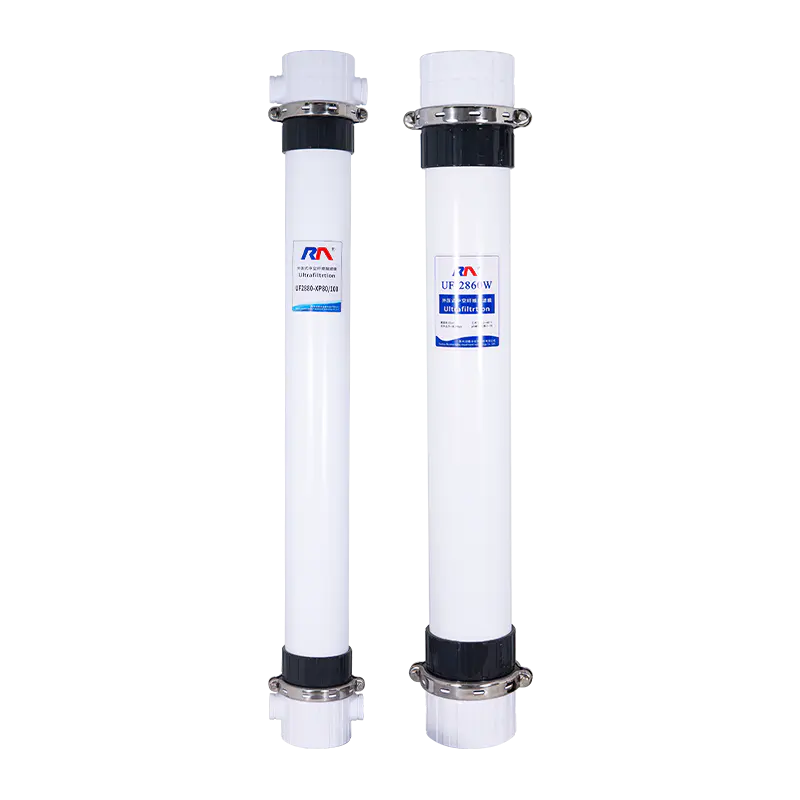
Membrane material is another consideration, particularly for UF applications. At Runmo, we provide UF membrane elements using modified PAN and PVDF materials, giving customers different material options for different operating environments.
Our modified PAN UF membrane is designed with permanent hydrophilicity, good oxidation resistance, thermal stability, and mechanical properties. Our PVDF UF membrane takes a different material approach, with high chemical stability, acid and alkali resistance, oxidation resistance, flexibility, and resistance to oxidant cleaning highlighted in our product information.
For buyers, this distinction matters because membrane material should be evaluated alongside cleaning conditions, feed-water characteristics, mechanical requirements, and the intended filtration process. A material should be selected according to the operating environment rather than simply based on a general perception of which material is superior.
How Should You Select a Membrane?
A practical membrane selection process starts with the feed water. TDS, temperature, pH, turbidity, organic loading, and other water-quality parameters can influence the appropriate membrane type and system configuration.
The required permeate flow and target rejection should then be defined. Operating pressure, recovery, cleaning requirements, membrane dimensions, and compatibility with existing equipment may also affect the final choice.
Our own selection guidance recommends considering feed-water TDS, temperature, pH, required permeate flow, target rejection rate, and operating pressure when choosing between our membrane technologies. Customers can also provide a water analysis report to our technical team for a more tailored recommendation.
This approach is particularly important for industrial buyers. Selecting a water membrane based only on its name or general application can overlook the conditions that ultimately determine system performance.
What Membrane Options Does Runmo Provide?
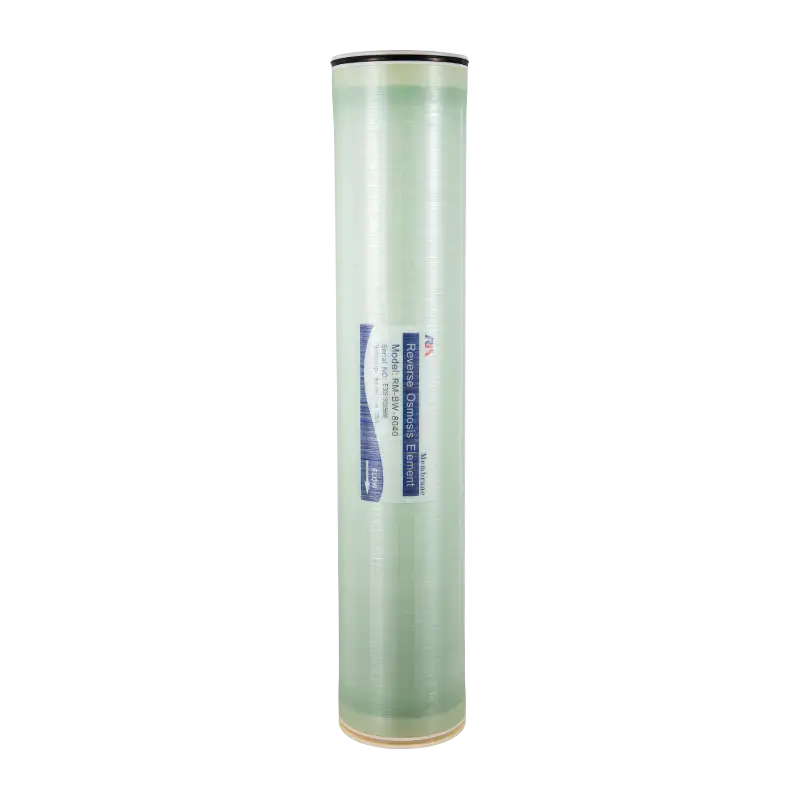
Our portfolio covers several membrane technologies for different treatment requirements. We offer ULP membranes for ultra-low-pressure operation, BW membranes for brackish-water applications, SW membranes for seawater and high-concentration brackish water, NF membranes for selective separation, and UF membranes in both PAN and PVDF materials.
For example, our ULP/XULP series uses thin-film composite polyamide materials. Under the specified test conditions, the series can operate at approximately two-thirds of the pressure used by conventional composite membranes, with desalination rates reaching up to 99.3%. The published application range includes surface water, groundwater, tap water, and municipal water with salt content below 2,000 ppm.
Our SW series is designed for seawater desalination and high-concentration brackish-water treatment. The RM-SW1-4040 is listed with 80 ft² (7.4 m²) of membrane area and an average permeate flow of 1,900 GPD (7.2 m³/d), while the RM-SW2-8040 has 380 ft² (35.2 m²) and an average permeate flow of 8,200 GPD (31 m³/d), based on the manufacturer’s stated testing conditions.
Why Work With Runmo?
We are Suzhou Runmo Water Treatment Technology Co., Ltd., a manufacturer integrating R&D, manufacturing, and sales of reverse osmosis, ultrafiltration, and polymer membrane technologies. We have automated production lines, an independent R&D system, more than 40 patents, and annual production capacity exceeding 800,000 membrane products, with products and technical support provided to customers in more than 60 countries.
Beyond supplying membrane elements, we provide support covering membrane material customization, system design, engineering implementation, and technical services.
If you are evaluating membrane filtration for wastewater reuse, desalination, high-purity water, or another industrial application, contact Runmo with your water-quality data and project requirements. We can help you assess the appropriate membrane technology and develop a solution around your actual operating conditions.