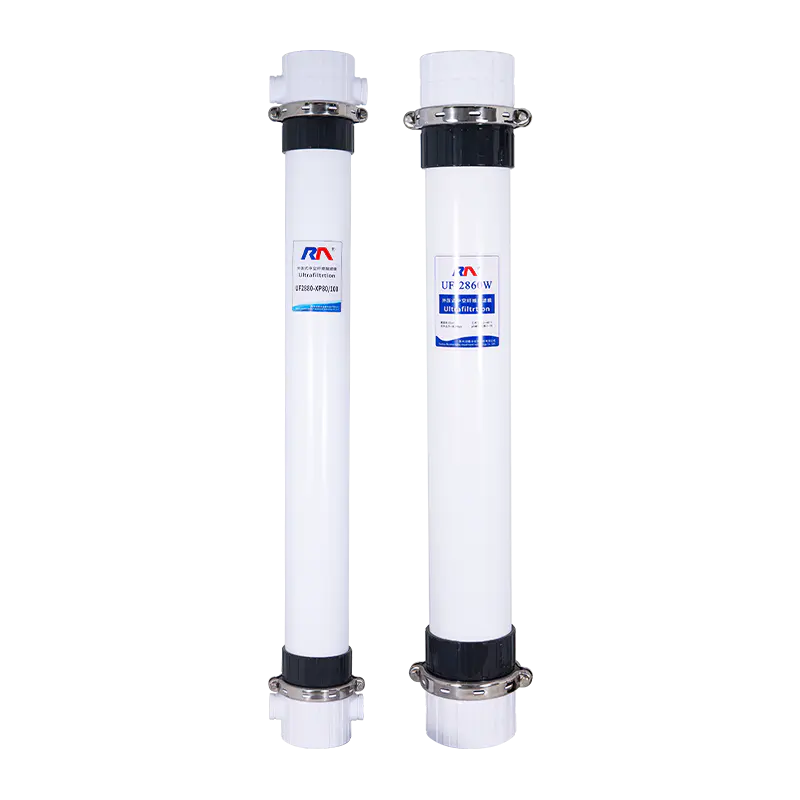
Contemporary fluid purification engineering relies heavily on sophisticated porous barriers to separate suspended particles from raw water sources across global processing plants. Facility operators constantly evaluate specialized physical filter networks to maintain high operational standards and protect downstream machinery from particulate fouling. Collaborating with trusted ultrafiltration membrane manufacturers helps project engineers source robust filtration modules tailored for demanding municipal and industrial fluid streams. Understanding the underlying material science and hydrodynamic properties of advanced hollow fiber modules empowers technical teams to optimize fluid treatment system performance significantly.
Thermal Stability and High-Temperature Fluid Handling
Thermal stability remains a critical factor when engineering liquid separation systems that must handle heated industrial wastewater streams or warm municipal effluents. Polyacrylonitrile polymer matrices exhibit exceptional structural resilience when exposed to elevated temperatures during continuous high-volume production cycles. Selecting specialized filtration components allows industrial facilities to process challenging thermal fluid inputs without experiencing polymer softening or microscopic distortion. Technical supervisors monitor temperature fluctuations closely to protect internal module assemblies from unexpected physical stress. In our modified PAN hollow fiber membranes, we prioritize thermal resilience to support stable operation in high-temperature process environments without compromising structural integrity.
Advanced polymer chemistry successfully prevents thermal degradation across extended operational windows in heavy manufacturing and power generation plants. Maintaining structural integrity under elevated heat loads enables continuous separation operations without requiring frequent cooling interventions. Engineering teams evaluate material thermal properties carefully to ensure long-term reliability across diverse industrial process environments.
Oxidation Resistance and Chemical Durability
Routine maintenance washing protocols frequently require introducing aggressive sanitizing agents to eradicate stubborn microbiological films and organic foulants from active surfaces. Modified polyacrylonitrile materials display remarkable resistance to chemical degradation when subjected to standard disinfecting agents during scheduled cleaning cycles.
Balancing chemical durability with high permeability allows facility operators to execute rigorous disinfection routines without accelerating material aging. Protecting the underlying polymer matrix from oxidative breakdown secures consistent operational performance over multi-year service spans. Our chemically resistant PAN formulation withstands repeated cleaning cycles while preserving pore structure and filtration efficiency.
Sanitizing filtration modules safely preserves active pore structures and prevents premature structural failure during harsh cleaning interventions. Technical personnel rely on chemically resilient polymer configurations to maintain steady water flux rates across multi-year operating windows. Long-term field assessments confirm that modern hollow fiber elements sustain high operational reliability in complex wastewater treatment environments.
Permanent Hydrophilicity and Wetting Dynamics
Hydrophilic surface characteristics play a decisive role in facilitating rapid water permeation and maintaining stable hydraulic throughput during continuous filtration runs. Modified polyacrylonitrile matrices possess permanent hydrophilic properties that attract water molecules naturally while repelling hydrophobic impurities effectively.
This inherent affinity for moisture prevents dry-spot formation inside hollow fiber bundles and stabilizes transmembrane pressure profiles. Facility operators appreciate how permanent surface wetting enhances overall hydraulic efficiency across heavy industrial processing lines. We engineer our PAN hollow fiber membranes with permanent hydrophilicity to maintain consistent wetting and stable flux performance over extended operating periods.
Sustained moisture retention across active fiber walls reduces energy consumption associated with fluid propulsion through dense modular arrays. Analytical testing demonstrates that hydrophilic polymer enhancements maintain high permeability performance even under fluctuating feed water turbidity levels.
Technical teams prioritize these specialized wetting dynamics to secure consistent liquid productivity across municipal water treatment works.
Mechanical Strength and Fiber Filament Resilience
Physical durability is an essential consideration when facility designers configure high-flow municipal and industrial liquid processing units. Flexible membrane filaments absorb mechanical stress effectively during pressurized backwashing cycles and continuous air scouring routines. This inherent flexibility reduces physical snapping rates significantly compared to brittle alternative polymers deployed historically in filtration systems.
Field investigation results demonstrate that modern hollow fiber configurations maintain exceptionally low breakage frequencies over extended operating lifespans. Our hollow fiber membranes are designed with high mechanical strength and flexibility to withstand backwashing, air scouring, and hydraulic shocks without fiber breakage.
Minimizing filament damage protects downstream polishing units from particulate contamination and raw water breakthrough events. Structural resilience allows separation modules to endure rigorous hydraulic shocks without suffering permanent physical deformation or tearing. Plant supervisors prioritize flexible polymer filaments to maintain uninterrupted operational continuity across demanding industrial water applications.
Inside-Out Flow Dynamics and Hydraulic Distribution
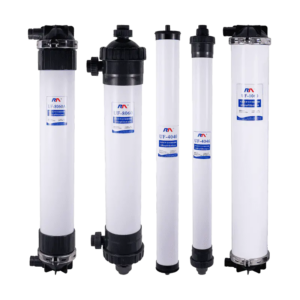
Internal pressure configurations distribute incoming raw fluid efficiently across massive active membrane filtration surface areas via central pipe brackets. Liquid flows outward through microscopic pores, leaving suspended colloids and microscopic pathogens trapped inside the hollow fibers. Utilizing inside-out hydrodynamic designs prevents external particulate clogging and simplifies routine surface cleaning procedures significantly.
Effective cross-flow fluid dynamics sweep accumulated debris away from active filtration surfaces continuously during operation. Runmo’s inside-out flow design simplifies cleaning and maintenance, allowing operators to achieve consistent hydraulic performance with minimal downtime.
Central pipe bracket designs ensure uniform filament distribution and smooth internal fluid flow profiles throughout the module housing. Reliable physical performance means that routine water washing and chemical cleaning cycles will not compromise structural integrity. Selecting appropriate flow configurations maximizes overall system efficiency and extends component operational lifespans significantly.
Microscopic Aperture Selectivity and Pathogen Removal
Raw water sources frequently harbor microscopic pathogens, bacteria, and colloidal matter that threaten public health and industrial system safety. Ultrafiltration modules feature exceptionally small nominal apertures capable of removing almost all suspended particles and biological agents.
Physical size exclusion mechanisms block bacteria and pathogens effectively without relying heavily on chemical disinfection additives. Water treatment technicians deploy these fine-pore barriers to purify municipal supplies and drinking water reservoirs safely. Our ultrafiltration membranes achieve consistent pathogen removal through precise pore size control, providing reliable protection for municipal water and industrial pretreatment applications.
Capturing microscopic turbidity prevents downstream scaling and biological contamination inside sensitive reverse osmosis separation loops. Rigorous pathogen removal safeguards delicate machinery and reduces overall plant maintenance downtime substantially across commercial installations. Multi-barrier protection secures high-purity water standards across diverse municipal and industrial processing sectors.
Pretreatment Protocols for Advanced Desalination Systems
Protecting delicate reverse osmosis active layers from particulate fouling remains a vital engineering objective in modern municipal plants. Upstream ultrafiltration barriers capture colloidal silica, organic macromolecules, and microbial cells before they reach high-pressure modules. Deploying reliable physical barriers upstream extends the operational lifespan of sensitive downstream filtration components significantly. System designers prioritize robust pretreatment protocols to prevent irreversible scaling and biological degradation in primary purification loops.
Minimizing particulate loading reduces overall chemical cleaning requirements and lowers long-term plant maintenance costs across commercial facilities. Integrated multi-stage protection secures continuous high-performance operation across demanding factory operating environments. Collaborating with experienced ultrafiltration membrane manufacturers helps engineering teams configure reliable pretreatment trains for complex raw water profiles.
Customizing Filtration Modules for Specialized Industrial Sectors
Industrial manufacturing plants generate complex wastewater streams containing aggressive solvents, heavy metals, and high concentrations of suspended solids. Industrial facility managers deploy robust ultrafiltration units as primary pretreatment barriers ahead of high-pressure desalination modules. Acquiring dependable separation hardware requires careful evaluation of manufacturing capabilities, technical support, and product customisation options. Industrial buyers look for partners who understand complex water quality challenges across diverse manufacturing sectors.
Sourcing components from qualified ultrafiltration membrane manufacturers provides facility managers with the tools needed to overcome complex purification challenges. Collaborating with experienced technical teams ensures seamless integration and long-term operational success for water treatment projects. Evaluating vendor credentials involves assessing research and development strength, patent portfolios, and customer service responsiveness. Industrial facilities benefit immensely from working with established production bases that maintain strict quality control standards.
Conclusion
Modern fluid treatment requires sophisticated separation science and dependable filtration hardware to satisfy strict environmental and operational standards. At Runmo, our team specializes in the technical development and production of high-performance polymer solutions, including advanced inside-out ultrafiltration membrane elements featuring modified polyacrylonitrile material. Finding trusted ultrafiltration membrane manufacturers helps engineering teams acquire durable filtration components designed for demanding municipal and industrial environments. Contact our engineering department today to discuss custom separation configurations for your upcoming fluid treatment initiatives.