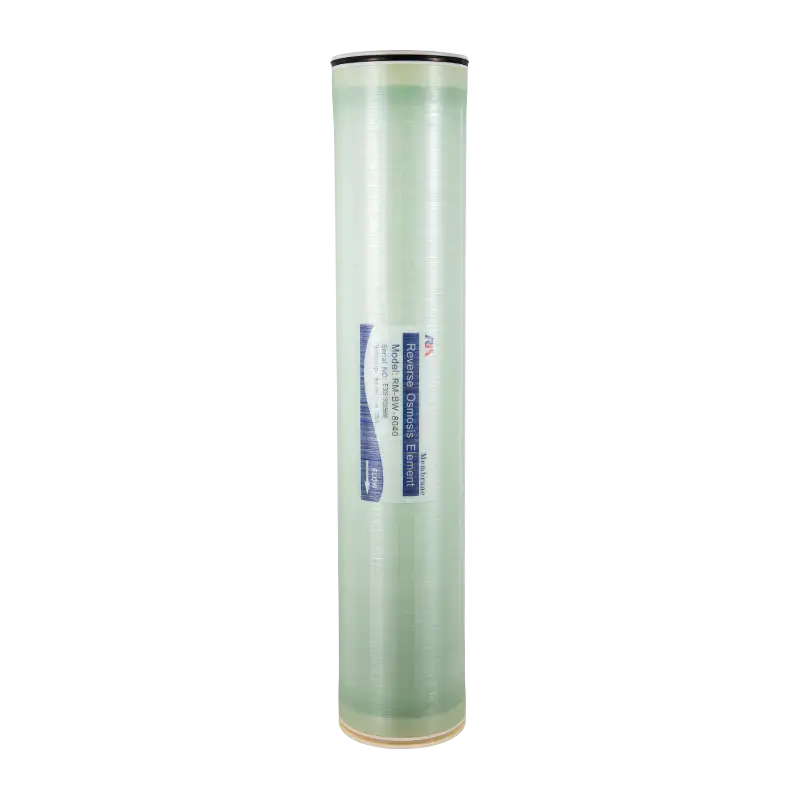
Fluid purification processes require diverse selective barriers to handle complex water compositions across industrial sectors and municipal supply networks. Engineers frequently deploy specialized polymer modules to target specific ionic species and organic compounds without engaging full-scale reverse osmosis. Implementing an advanced nanofiltration membrane provides a strategic middle ground between loose ultrafiltration and tight desalination processing. Scientific developments in polymer chemistry continue to expand how water treatment specialists approach selective ion removal.
Selective Ionic Separation and Pore Dynamics
Intermediate filtration layers operate on unique charge-exclusion principles and microscopic size-exclusion thresholds that differentiate divalent ions from monovalent salts. Water treatment engineers leverage these specialized characteristics to soften hard water streams while permitting smaller sodium ions to pass through freely. Selecting a proper nanofiltration membrane allows industrial processors to achieve targeted mineral removal without excessive energy consumption. Managing cross-flow velocities across active surfaces prevents localized polarization from disrupting daily separation performance.
Microscopic pore distribution networks within modern polyamide matrices determine the precise molecular weight cut-off for each individual filtration element. Laboratory investigations confirm that specialized polymer structures retain organic molecules effectively while displaying moderate salt rejection capabilities. Facility operators monitor ionic conductivity profiles closely to verify that separation units maintain consistent operational parameters over long service intervals.
Removal of Natural Organic Matter and Disinfection Byproducts
Surface water reservoirs frequently harbor complex natural organic matter that reacts unfavorably with traditional chemical disinfectants during municipal processing stages. Specialized polymeric barriers intercept humic substances and aquatic macromolecules before those organic compounds enter public distribution networks. Deploying a high-performance nanofiltration membrane significantly reduces the formation of hazardous disinfection byproducts in finished drinking water. Water utility managers prioritize these intermediate separation barriers to safeguard public health across urban supply zones.
Intercepting precursors of harmful chemical compounds requires stable surface charge properties and high structural hydrophilicity across active element layers. Analytical testing demonstrates that advanced polymer matrices achieve remarkable retention rates for diverse organic pollutants found in raw water supplies. Municipal authorities rely on these specialized filtration tools to meet strict regulatory drinking water compliance standards effortlessly.
Pathogen Interception and Microorganism Elimination
Impaired water sources often carry dangerous microorganisms, bacteria, and viral contaminants that threaten community health and industrial production safety. Advanced physical barrier configurations feature exceptionally small nominal apertures capable of intercepting biological pathogens efficiently. Integrating a dependable nanofiltration membrane into municipal treatment trains provides a reliable secondary defense against waterborne biological hazards. Technical teams depend on precise size-exclusion mechanisms to maintain sterile operating standards across sensitive fluid lines.
Eliminating microscopic pathogens without relying exclusively on heavy chemical dosing preserves the natural chemical balance of treated water streams. Rigorous microbiological testing confirms that sophisticated polymer structures prevent bacterial breakthrough even during fluctuating feed water conditions. Public health officials endorse intermediate filtration systems for their ability to deliver biologically safe water consistently.
Low-Pressure Operation and Hydraulic Efficiency
Traditional high-salinity separation networks demand substantial mechanical force to overcome massive osmotic pressure differentials within processing vessels. Modern polymer innovations have successfully lowered the operational energy threshold required for effective intermediate water purification tasks. Ultra-low pressure operating modes significantly enhance system hydraulics and overall operational efficiency across large industrial plants. Facility operators utilize these energy-saving characteristics to manage facility power budgets more sustainably over long horizons.
Lower mechanical stress profiles extend the operational lifespan of auxiliary infrastructure components like high-pressure piping manifolds and control valves. Energy-saving separation technologies transform how municipal authorities manage regional water purification and large-scale industrial fluid processing tasks. Technical operators monitor energy consumption metrics daily to verify that pumping stations operate within optimal performance ranges.
Industrial Applications in Specialized Chemical Processing
Chemical manufacturing plants and specialized industrial facilities generate complex aqueous streams containing valuable dissolved compounds and heavy mineral fractions. Industrial processors deploy intermediate separation modules to concentrate high-value-added substances from complex liquid mixtures without thermal degradation. Utilizing advanced polymer components enables factories to recover reusable byproducts while treating industrial effluent efficiently. Strategic fluid management bridges the gap between industrial productivity and resource conservation across manufacturing sectors.
Purifying process streams in chemical manufacturing environments demands strict adherence to sanitary design standards and rigorous cleaning validation protocols. Specialized polymeric barriers prevent chemical fouling while isolating target solute fractions with high precision. Advanced concentration techniques empower industrial operators to recover valuable materials from complex liquid solutions smoothly.
Municipal Water Softening and Hardness Reduction
Hard groundwater sources contain elevated concentrations of calcium and magnesium ions that cause severe scale deposition inside municipal pipes. Conventional chemical softening methods generate massive sludge volumes that create difficult disposal challenges for municipal utility managers. Advanced polymer separation units reduce total water hardness selectively without introducing hazardous chemical precipitation agents into the water. Public works departments adopt membrane softening to protect distribution infrastructure and improve consumer water quality.
Managing hardness levels effectively prevents mineral scaling inside residential and commercial water heating appliances across urban communities. Technical supervisors evaluate scaling indices daily to ensure that municipal softening networks operate at peak efficiency. Sustainable mineral management protects regional water distribution systems from premature mechanical failure and high maintenance costs.
Pretreatment Protocols and Fouling Prevention
Upstream clarification stages play a decisive role in protecting sensitive intermediate separation layers from premature mechanical damage and fouling. Coarse screening, multimedia filtration, and ultrafiltration modules capture suspended silt and biological matter before fluid reaches high-pressure pumps. Neglecting upstream pretreatment often triggers rapid particulate fouling and irreversible membrane channel blockage across commercial loops. Plant supervisors monitor silt density indexes daily to verify that raw feed water meets strict inlet quality criteria.
Deploying comprehensive multi-barrier protection safeguards delicate polymer structures against sudden chemical shock and physical abrasion during operation. Minimizing particulate loading reduces overall chemical cleaning requirements and lowers long-term facility maintenance expenditures substantially. Integrated pretreatment strategies secure continuous high-pressure performance across challenging industrial operating environments.
Conclusion
Nanofiltration requires membrane technology that balances selective ion rejection with operational efficiency and chemical durability. At Runmo, we address these requirements through continuous material innovation and precision manufacturing of our nanofiltration membrane elements. Our service model combines custom product engineering, robust quality management, and post-installation technical support for projects ranging from surface water treatment to industrial wastewater recycling. For those planning advanced fluid treatment initiatives, our technical advisory group offers consultation on element selection, system design, and performance optimization.