Reverse osmosis (RO) is widely used when dissolved salts and other impurities need to be separated from water. However, not every RO application requires the same operating pressure. For relatively low-salinity feed water, operating a system at unnecessarily high pressure can increase the energy demand and place additional requirements on pumps and related equipment. This is where low pressure membranes can become an important consideration.
Why Operating Pressure Matters in RO Systems
Pressure is fundamental to the reverse osmosis process. Feed water must be pressurized sufficiently to overcome osmotic pressure and drive water through the membrane while dissolved salts are retained.
The required pressure depends heavily on the characteristics of the feed water. TDS, temperature, pH, desired permeate flow, target salt rejection, and system configuration all influence membrane selection. For this reason, a membrane designed for seawater should not automatically be selected for a low-salinity application.
For surface water, groundwater, tap water, or municipal water with relatively low salt content, a membrane capable of achieving the required separation at lower operating pressure may provide a more appropriate system configuration.
What Makes a Membrane Suitable for Lower-Pressure Operation?
A lower-pressure RO membrane still needs to provide a practical balance between permeate production and salt rejection. Simply reducing pressure without considering membrane characteristics can affect system performance.
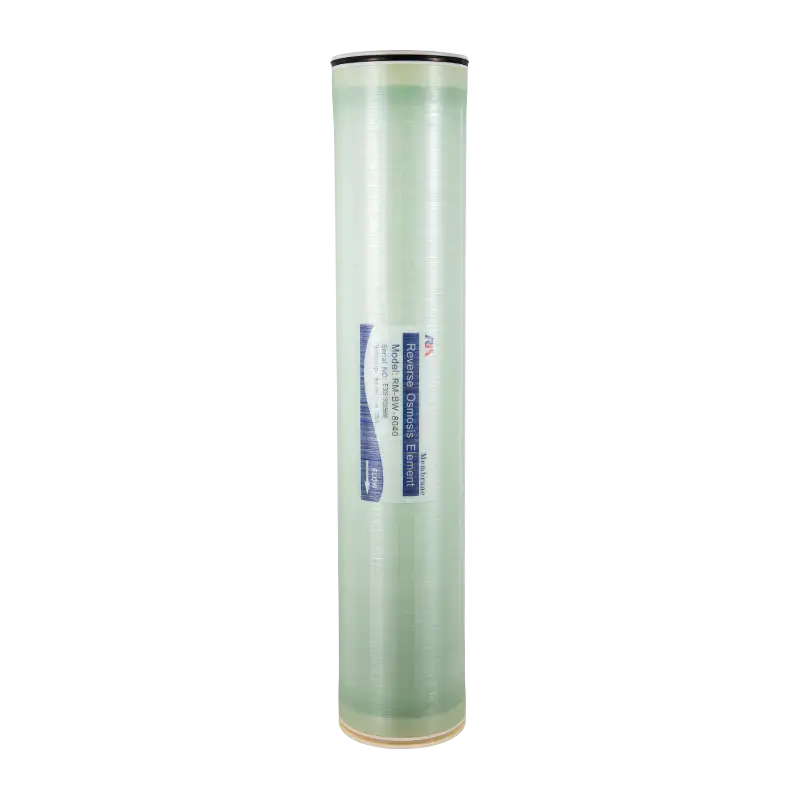
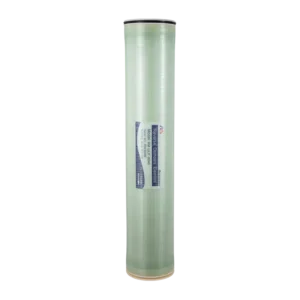
Our ULP/XULP series uses TFC, or thin-film composite, polyamide membrane materials. According to our published product data, these elements are designed to achieve the required permeate production and high desalination performance under ultra-low or extremely low operating pressure conditions. Their operating pressure is stated as approximately two-thirds of the pressure used for conventional composite membranes, with actual test pressure varying by model, while the desalination rate can reach up to 99.3% under the applicable product conditions.
This operating approach can be relevant when system designers are looking to reduce the pressure requirement of a RO installation rather than simply selecting a conventional membrane and operating it below its intended range.
Where Lower-Pressure RO Membranes Can Be Used
Feed-water quality is one of the most important factors when evaluating a lower-pressure RO solution. Our ULP/XULP series is designed for surface water, groundwater, tap water, and municipal water with salt content below 2,000 ppm.
The series is also intended for industrial applications such as pure water production, boiler recharge water, food processing, and pharmaceutical manufacturing. These applications can have different water-quality requirements, so membrane selection still needs to be based on the actual feed-water analysis and required permeate quality.
This distinction is important for buyers. A membrane should not be selected simply because its pressure requirement is lower. The feed-water TDS, operating temperature, recovery, required flow, and rejection target should all be considered together.
How Lower Operating Pressure Can Affect System Design
One practical reason to evaluate low pressure membranes is their potential impact on the equipment surrounding the membrane itself. When the membrane can achieve its intended performance at a lower pressure, the RO system may require less pressure from the feed pump under suitable operating conditions.
Our ULP/XULP membranes can potentially reduce investment costs for pumps, pipelines, pressure vessels, and other related equipment, as well as lower operating costs for the overall RO system.
The actual economic result, however, depends on the complete system design. Pump efficiency, recovery, pretreatment, membrane loading, water quality, and operating schedule can all influence the final energy and equipment costs.
What Should Buyers Check Before Selecting a Membrane?
Before choosing a lower-pressure element, we recommend starting with the water rather than the membrane model. At Runmo, we consider feed-water TDS, temperature, pH, required permeate flow, target rejection, and operating pressure when recommending membrane products. You can also provide us with a water analysis report for more tailored membrane selection.
The published ULP/XULP data also shows that testing conditions matter. For example, the product performance data is based on specific testing pressures, a temperature of 25°C, NaCl concentration of 1,500 ppm, pH 7.5, and specified single-element recovery rates. Therefore, published permeate flow and rejection figures should be understood in relation to their stated test conditions rather than treated as universal operating results.
Our ULP/XULP series includes different element sizes and performance levels. For example, the RM-ULP-4021 has a membrane area of 42 ft² and an average permeate flow of 950 GPD, while the RM-ULP-8040 has a membrane area of 400 ft² and an average permeate flow of 10,500 GPD under the published test conditions.
Why Product Selection Should Be Considered as Part of the Whole System
Membrane selection does not happen independently of pretreatment and system design. Feed-water conditions need to remain within the membrane’s operating limits, and the system needs to be designed around the required flow and rejection performance.
For our ULP/XULP series, the published maximum working pressure is 600 psi (4.14 MPa), with a maximum feed-water TDS of 2,000 ppm, maximum feed-water temperature of 45°C, and continuous operating pH range of 2–12. Other limits, including SDI, turbidity, residual chlorine, COD, BOD, TOC, and feed-water flow, also need to be considered during system design.
This is why we recommend evaluating membrane specifications together with the actual water conditions instead of choosing a product based on operating pressure alone.
Our Approach to Lower-Pressure Membrane Solutions
At Runmo, we focus on the development and manufacturing of reverse osmosis, ultrafiltration, and polymer membrane technologies. Our product portfolio includes ULP, BW, SW, NF, PAN UF, and PVDF UF membrane products for different water-treatment requirements.
We operate an independent R&D system and automated production lines, with an annual production capacity of more than 800,000 membrane products and more than 40 patents. We also provide technical support for customers in more than 60 countries.
For projects considering lower-pressure RO operation, our role goes beyond supplying a membrane element. We can support product selection and provide technical consultation based on project requirements and water-quality information.
If you are evaluating a RO system for low-salinity feed water and want to determine whether a lower-pressure membrane is suitable, contact us with your water analysis and required flow. We can help you evaluate the appropriate ULP/XULP membrane configuration for your application.