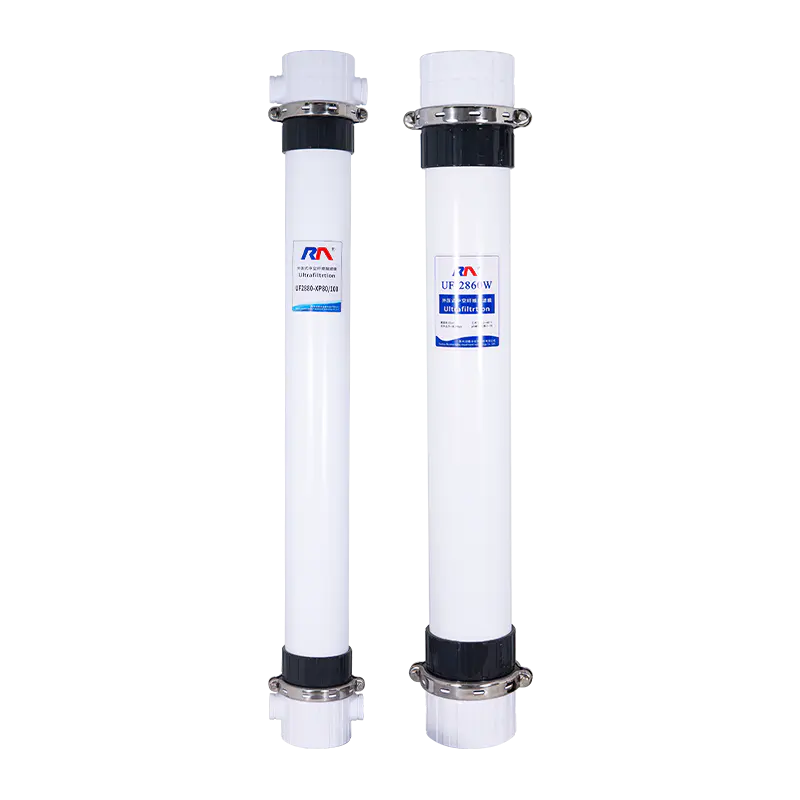
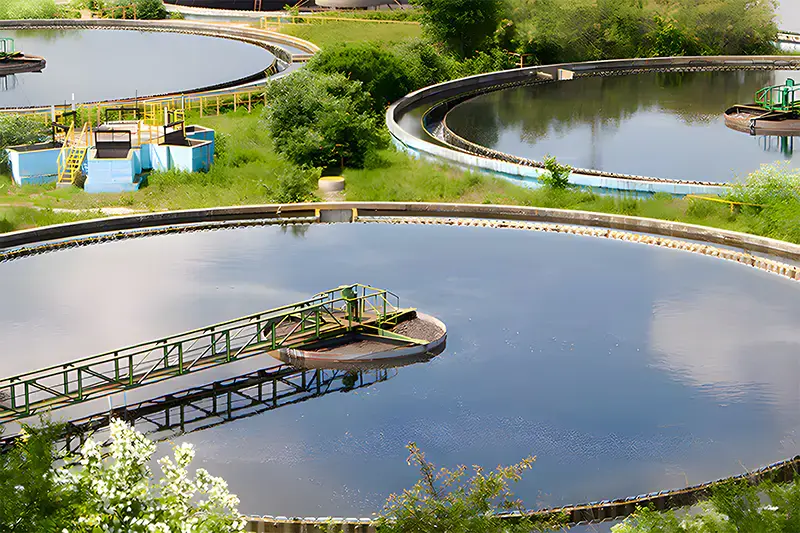
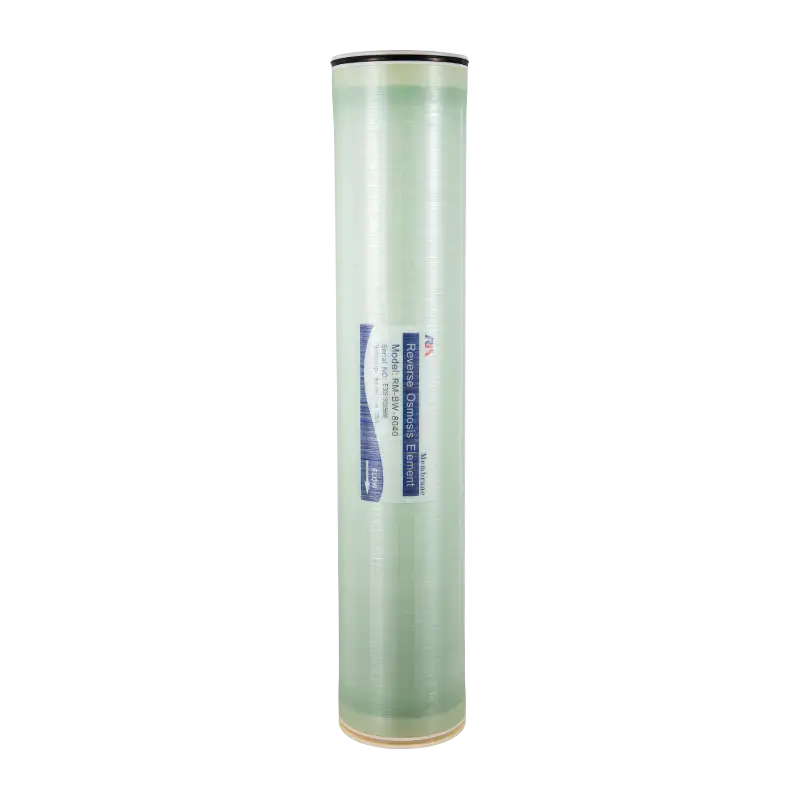
Ultrafiltration systems are often selected when a water treatment process needs to remove suspended particles, colloids, microorganisms, and other larger contaminants before a downstream purification stage. Among the different membrane configurations used for UF, hollow-fiber designs are widely associated with compact filtration systems and a large membrane area within a practical module format.
For buyers, however, understanding the structure is only the beginning. The more important questions are how the membrane handles feed water, how it can be cleaned, and whether its operating mode fits the treatment process. At Runmo, we develop ultrafiltration membrane products in both PAN and PVDF materials, with our PAN series using a modified material and an inside-out filtration structure.
What Is a Hollow Fiber Ultrafiltration Membrane?
A hollow fiber ultrafiltration membrane uses numerous small membrane fibers assembled into a filtration module. Water passes through the membrane while particles and other contaminants that are larger than the membrane’s effective separation range are retained.
The basic principle is different from simply using a conventional filter. The membrane provides a controlled separation barrier, while the module configuration determines how feed water contacts the membrane surface and how treated water is collected.
For Runmo’s PAN UF range, an inside-out ultrafiltration membrane element using modified PAN material. We specifically identify its high-strength membrane filament, uniform filament distribution, and central pipe bracket designed to maintain smooth water flow. The site does not label the product itself with the term “hollow fiber,” so we use that terminology here to explain the broader membrane format rather than present it as an official Runmo model designation.
How Does the Filtration Process Work?
The effectiveness of UF depends on the membrane barrier as well as the way water moves through the module. During operation, feed water is brought into contact with the membrane surface, allowing water to pass through while retained contaminants remain on the feed side.
Our PAN product can operate in either full-volume filtration or cross-flow filtration according to the water-quality conditions. Full-volume filtration can provide advantages in energy consumption and water utilization, while cross-flow operation can help remove accumulated contaminants from the membrane surface.
This flexibility is useful because feed-water conditions are not identical across projects. A relatively manageable feed stream may be suitable for one operating approach, while a more fouling-prone stream may benefit from cross-flow operation and more active contaminant management.
Why Is PAN Used for UF Membranes?
Membrane material affects chemical resistance, mechanical behavior, and how a membrane responds to operating and cleaning conditions. Our PAN series uses modified polyacrylonitrile material and is designed around several characteristics, including oxidation resistance, thermal stability, mechanical properties, and permanent hydrophilicity.
We also recognize that material selection involves trade-offs. PAN has comparatively weaker fouling resistance. We therefore modify the material and membrane to improve this characteristic rather than treating the base material as sufficient by itself. This is an important consideration when evaluating a hollow fiber ultrafiltration membrane for continuous water treatment.
Mechanical strength is another consideration. Our PAN membrane filament has a published breakage rate of less than three thousandths, while the central pipe bracket is designed to distribute the filaments evenly and maintain smooth water flow.
Where Are These UF Membranes Commonly Used?
Reverse Osmosis Pretreatment
One of the relevant uses for our PAN UF membrane elements is reverse osmosis pretreatment. Before water reaches a RO stage, UF can provide a separation step that helps manage suspended matter and other larger contaminants.
Runmo specifically identifies the PAN UF system as a suitable option for RO pretreatment. This makes the technology relevant to treatment trains where consistent feed-water quality is important for downstream membrane operation.
Pure Water and Industrial Water Treatment
Our PAN UF products are also listed for pure-water preparation, boiler recharge water, food processing, and pharmaceutical manufacturing. These applications can have different feed-water characteristics, so the membrane configuration and operating method should be selected according to the actual process requirements.
Our broader membrane portfolio also covers other water-treatment applications, including municipal water supply and industrial wastewater reuse. This allows us to consider UF as part of a larger membrane treatment process rather than as an isolated filtration product.
What Should Buyers Check Before Selection?
Membrane format should not be the only purchasing criterion. We recommend first identifying the feed-water quality, required treatment capacity, operating conditions, and downstream process.
For our PAN series, the published product range includes multiple internal pressure UF membrane elements. The published 4-inch/6-inch product series includes models such as RM-UF-4040, RM-UF-4021, RM-UF-4046, RM-UF-4046 short, and RM-UF-160B, while larger 8-inch and 10-inch models include RM-UF-8040, RM-UF-8060, RM-UF-8060L, RM-UF-8060A, and RM-UF-1060(D).
The appropriate model depends on the required membrane area and system capacity. We therefore recommend evaluating the complete water analysis and system design instead of selecting a membrane solely because its fiber configuration or physical size appears suitable.
Why Choose Runmo for UF Applications?
At Runmo, we are Suzhou Runmo Water Treatment Technology Co., Ltd., a manufacturer integrating R&D, manufacturing, and sales of reverse osmosis membranes, ultrafiltration membranes, and polymer membrane technologies. We maintain an independent R&D system and automated production lines, with annual production capacity of more than 800,000 membrane products and more than 40 patents. Our products and technical support serve customers in more than 60 countries.
Our UF portfolio includes both PAN and PVDF membrane technologies, allowing us to consider material characteristics alongside the actual feed-water and treatment requirements. We also provide customized membrane solutions, system design, engineering implementation, and technical support for different water-treatment projects.
If you are evaluating a hollow fiber ultrafiltration membrane for RO pretreatment, pure-water preparation, industrial water treatment, or another UF application, contact Runmo with your feed-water information and required capacity. We can help you assess the appropriate membrane material, configuration, and operating approach for your system.