Membrane selection is one of the most important decisions in a water treatment system. RO, NF, and UF are all pressure-driven technologies, but they address different separation requirements. Choosing between them requires more than looking at filtration performance. Feed-water quality, target water quality, operating pressure, system configuration, and downstream processes all need to be considered together.
For water treatment companies, system integrators, and project operators, understanding these differences can make membrane selection more practical and reduce the risk of specifying a technology that does not match the application.
What Is the Difference Between RO, NF, and UF?
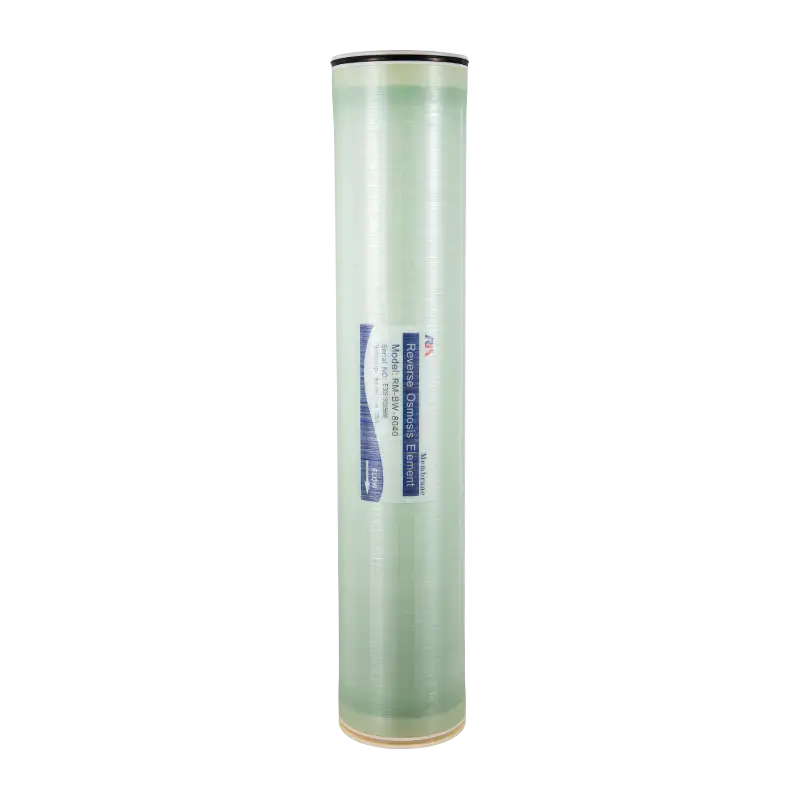
Reverse osmosis, or RO, is generally used when substantial removal of dissolved salts and other dissolved constituents is required. Pressure forces water through a semipermeable membrane while many dissolved substances are retained. This makes RO particularly relevant to desalination and the production of purified water.
Nanofiltration, or NF, operates at a different separation level. NF membranes can provide selective removal of certain dissolved contaminants while allowing some smaller substances to pass through. This makes NF useful when a project requires selective separation rather than the broader desalination associated with RO.
Ultrafiltration, or UF, focuses on larger substances such as suspended solids, colloids, and microorganisms. It is therefore frequently considered for feed-water purification, wastewater treatment, and pretreatment before downstream membrane processes. The appropriate technology depends on what the system needs to remove rather than simply choosing the membrane with the finest separation capability.
When Should a Project Use RO, NF, or UF?
The first question should be: what is in the feed water?
If the primary concern is suspended matter or larger contaminants, UF may be appropriate. If hardness, natural organic matter, or selected dissolved substances need to be controlled, NF can provide a more selective approach. When dissolved salts and overall TDS reduction are central requirements, RO is generally the more relevant technology.
The second question concerns the required permeate quality. A system designed for industrial reuse may have very different requirements from one producing high-purity process water. Our selection guidance recommends considering feed-water TDS, temperature, pH, required permeate flow, target rejection, and operating pressure when choosing a membrane.
These technologies can also be combined. For example, UF may provide pretreatment before RO, helping the overall process manage suspended material before water reaches the RO stage. In more complex treatment systems, NF and RO can also serve different stages according to the required separation level.
How Do Membrane Materials Affect UF Performance?
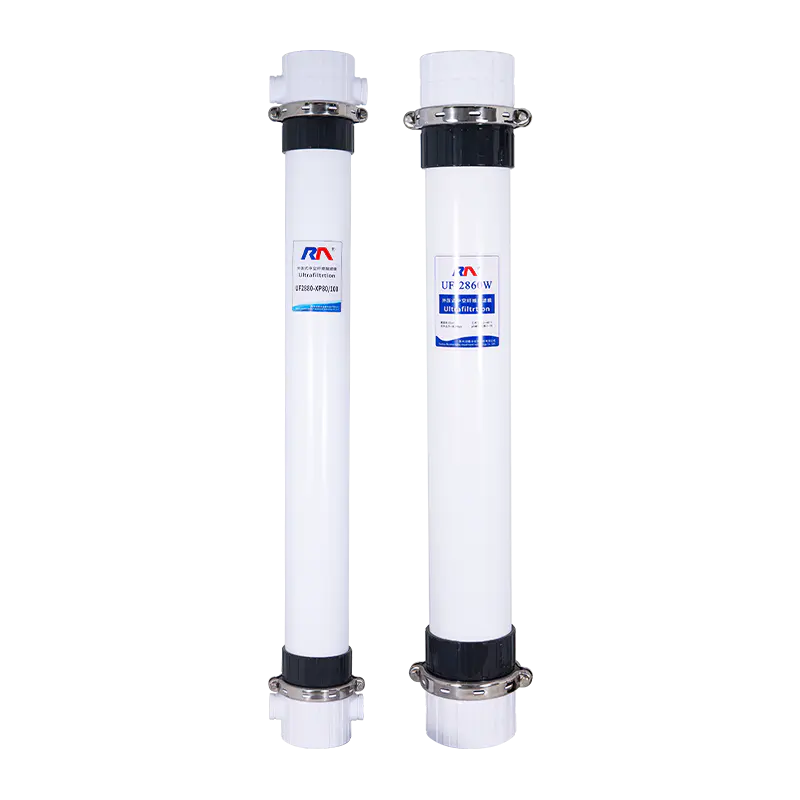
Material selection becomes particularly important when evaluating UF membranes. At Runmo, we offer UF membrane elements based on both modified PAN and PVDF materials, giving buyers different options for different operating environments.
Our modified PAN UF membrane uses a material approach designed to provide oxidation resistance, thermal stability, mechanical strength, and permanent hydrophilicity. The membrane can be configured for full-volume or cross-flow filtration depending on water-quality conditions. Our official product information also describes its use in applications including industrial water, food processing, pharmaceutical manufacturing, and RO pretreatment.
Our PVDF UF membrane takes a different approach. PVDF provides high chemical stability, oxidation resistance, and resistance to acids and alkalis. Runmo’s product information also highlights flexibility, high strength, hydrophilic modification, and resistance to cleaning conditions as characteristics of this membrane material.
For buyers comparing UF options, the important point is not that one material is universally superior. Instead, the material should be matched with feed-water conditions, cleaning procedures, mechanical requirements, and the intended treatment process.
What RO Options Are Available for Different Water Sources?
RO membrane selection also depends heavily on feed-water salinity.
Our ULP and XULP series use thin-film composite polyamide materials and are designed for ultra-low or extremely low pressure operation. Runmo specifies operating pressure at about two-thirds of conventional composite membrane pressure, with desalination rates of up to 99.3% under the stated conditions. The series is intended for surface water, groundwater, tap water, and municipal water with salt content below 2,000 ppm.
For brackish-water applications, our BW series uses aromatic polyamide composite membrane elements. It is designed for surface water, groundwater, tap water, and municipal water with salt content below 10,000 ppm, with applications including industrial pure water and boiler feed water.
For higher-salinity applications, our SW series is designed for seawater and high-concentration brackish water, with performance specifications based on Runmo’s stated test conditions. For example, the RM-SW1-4040 has 80 ft² (7.4 m²) of membrane area and an average permeate flow of 1,900 GPD (7.2 m³/d), while the RM-SW2-8040 has 380 ft² (35.2 m²) and an average permeate flow of 8,200 GPD (31 m³/d). These figures are based on Runmo’s specified test conditions and should not be treated as universal field performance.
How Should Buyers Select a Membrane?
A practical selection process should begin with water analysis rather than product preference. Buyers should then define the required permeate flow and rejection target, followed by operating pressure, recovery, cleaning requirements, and element dimensions.
Buyers should then define the required permeate flow and rejection target, followed by operating pressure, recovery, cleaning requirements, and element dimensions. Existing equipment is another consideration, particularly for replacement projects where compatibility with the installed system matters.
This is where a suitable Runmo membrane can become part of a broader engineering decision rather than simply a replacement component. We work with customers on membrane selection and customized requirements, and our FAQ states that we provide OEM and ODM services for system integrators and distributors.
Why Choose Runmo for Membrane Solutions?
We are Suzhou Runmo Water Treatment Technology Co., Ltd., a manufacturer specializing in reverse osmosis, ultrafiltration, and polymer membrane technologies. We have an independent R&D system, automated production lines, more than 40 patents, and annual production capacity of more than 800,000 membrane products, with products and technical support provided to customers in more than 60 countries.
Our product portfolio covers ULP, BW, SW, NF, and UF membranes, including both PAN and PVDF UF options. Beyond membrane manufacturing, we provide support covering membrane material customization, system design, engineering implementation, and technical services.
If you are evaluating RO, NF, or UF for a new water treatment project, send us your feed-water information and application requirements. At Runmo, we can help you assess the appropriate membrane category and discuss a solution based on your actual operating conditions.